
Water extraction (visible and hidden)
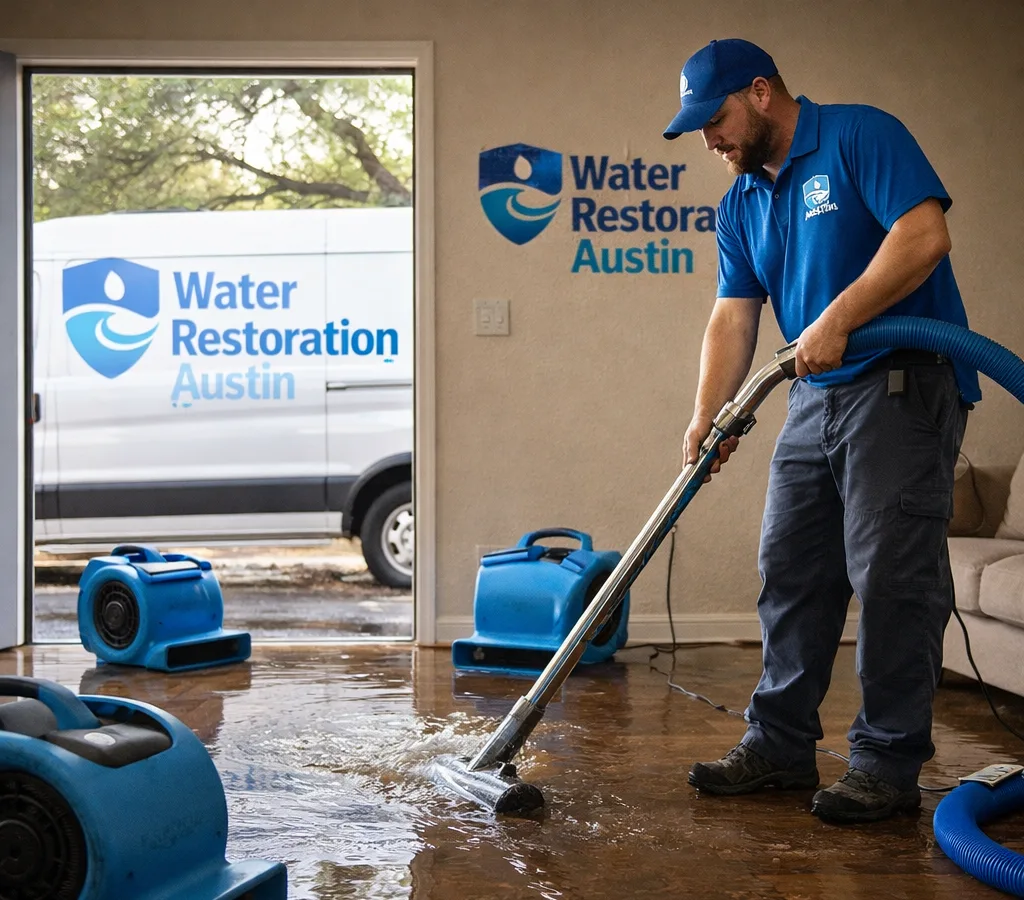
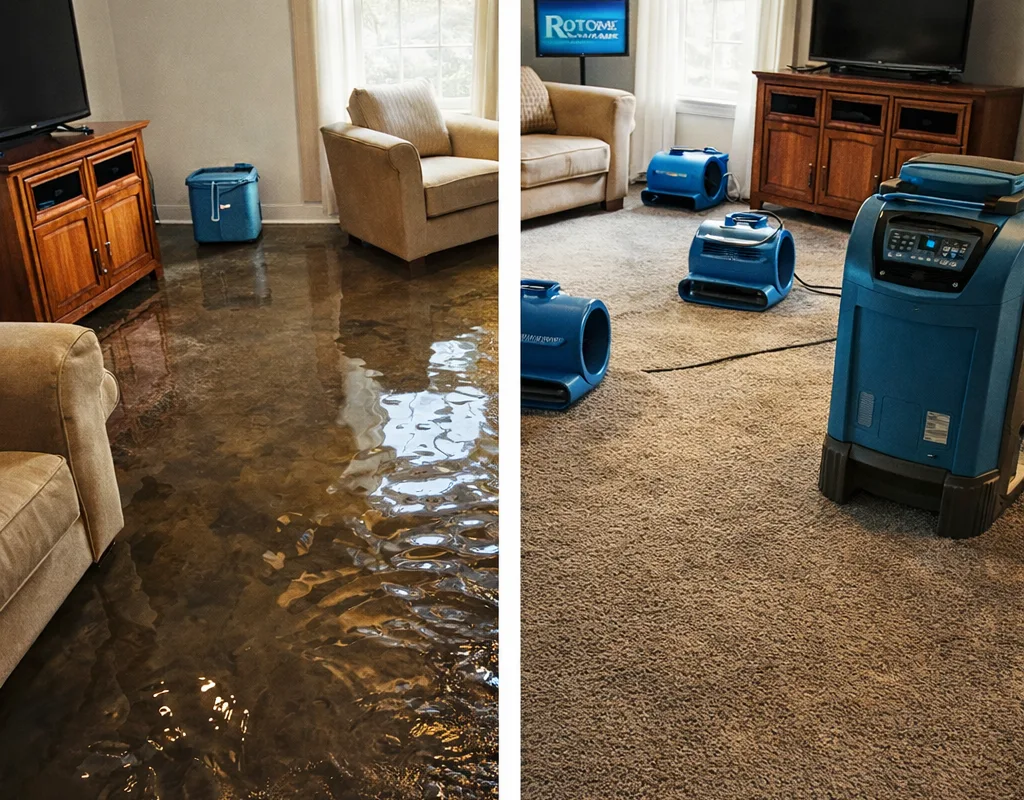
We remove standing water with commercial extractors and follow up where water migrates: under floating floors, beneath carpet padding, behind baseboards, and at transitions between rooms.
Serving Austin, Texas & surrounding areas
Water removal • Austin, Texas
Fast extraction, focused drying, and clear next steps for homes and businesses dealing with leaks, flooding, or burst pipes in Austin.
Fast action, measured drying
When you need water removal Austin help, time matters more than almost anything else. Standing water keeps soaking into flooring, baseboards, drywall, and cabinets, and it can spread into adjacent rooms through slab edges, wall cavities, and shared framing. The right first steps are simple: stop the source, remove water quickly, document what happened, then dry the structure the right way.
Water Restoration Austin handles water removal for both residential and commercial spaces across Austin. We focus on practical outcomes: safe access to the space, controlled drying, and a plan that fits what actually happened—a supply-line leak is different from stormwater intrusion.
If you are looking for broader water restoration in Austin, water removal is typically the first phase, followed by structural drying, monitoring, and any needed repairs coordinated around your property and schedule.
Extraction through verification
We remove standing water with commercial extractors and follow up where water migrates: under floating floors, beneath carpet padding, behind baseboards, and at transitions between rooms.
Air movers, dehumidifiers, and containment are set based on materials and airflow. Drying is managed, not guessed, so you do not over-dry one area while another stays wet.
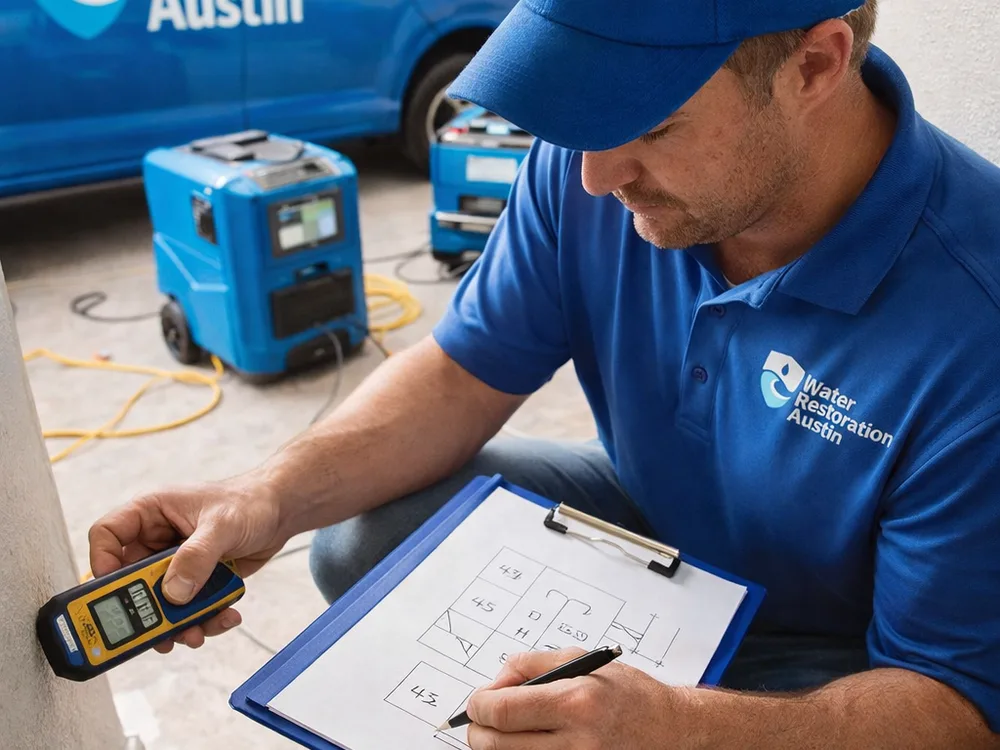
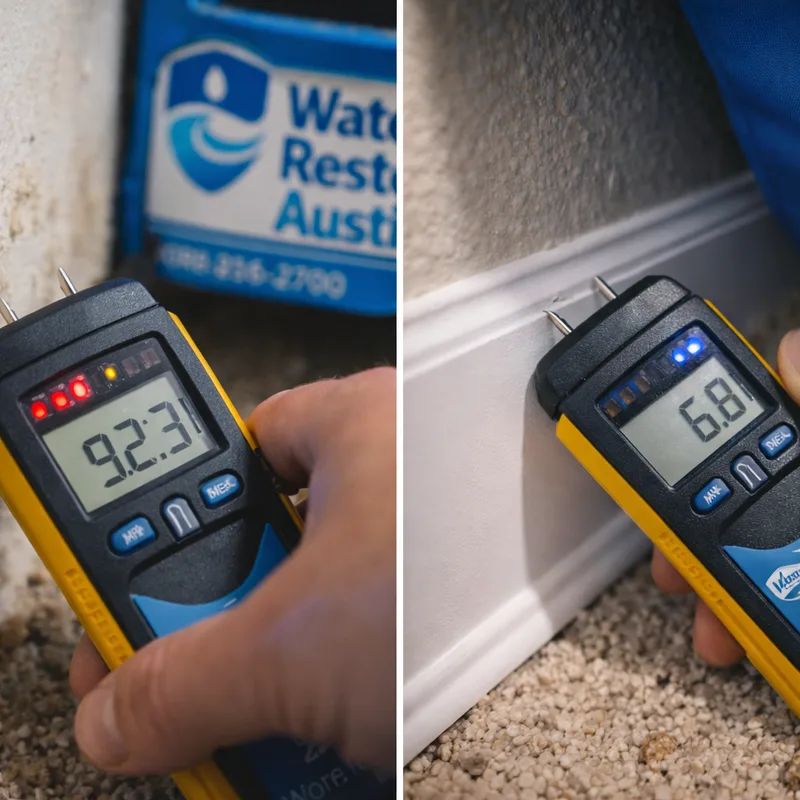
We use moisture meters and thermal imaging as appropriate to map affected areas, track drying progress, and confirm when materials are ready for the next step.
Wet debris is removed when needed, surfaces are cleaned, and the work area is kept orderly to reduce slip hazards and disruption.
We can provide photos, readings, and a written scope of what was affected and what was done, which helps with claim communication and decision-making.
Not everything wet must be torn out, but some materials cannot be reliably dried. We explain the difference so you can make informed choices.
Built around the structure
Austin properties include a wide mix of construction styles, and that changes how water behaves.
In older Central Austin homes, multiple flooring layers and remodeled additions can hide moisture between materials, so a quick surface dry is rarely enough. In South Austin houses with slab-on-grade foundations, water can travel laterally under certain floor systems and show up far from the original leak. In Downtown and The Domain commercial spaces, water removal often needs after-hours access, elevator protection, and careful staging to keep tenants moving.
We adjust the approach to the structure, not the zip code. The goal is the same every time: remove water quickly, control humidity, and verify dryness with measurements so you can confidently move to repairs or reopening.
If you are not sure what kind of water you are dealing with—clean supply water versus contaminated water—we can walk you through what that means for cleanup steps and what materials may need to be removed for safety.
From source control to clearance
We start by confirming the water source is stopped—or advising what to do next if a plumber or building engineer is needed—then identify safety issues like electrical exposure, ceiling sag, or slip hazards.
We check the affected rooms and likely migration paths, then document the initial conditions. This is where we determine what can be dried in place and what needs removal.
Standing water is extracted first. If materials like saturated padding, swollen particle board, or heavily impacted drywall cannot be dried reliably, we explain why and remove only what is necessary.
We place air movers and dehumidifiers based on the room layout and materials, and we use containment when it helps control airflow and humidity.
We return to record moisture readings and adjust equipment placement until target materials reach acceptable dry standards. Then we provide closeout documentation and next-step guidance.
Extraction, readings and drying
Customer experiences
“A supply line leaked while we were out and water got under the flooring. They explained what could be dried, what had to come out, and kept checking moisture readings until it was stable. The written notes and photos made the insurance conversations a lot easier.”
“We had water in a small office suite and needed things handled quickly without making a bigger mess. The crew was organized, protected the walk paths, and had drying equipment running the same day.”
Before cleanup begins
Water removal should start as soon as it is safe, because water keeps wicking into drywall, trim, and flooring the longer it sits. If you can safely shut off the source and move valuables up off the floor, do that first, then get a professional assessment so drying and documentation begin before secondary damage spreads.
Cost depends on the amount of water, how far it migrated, the materials involved, and how many days of drying and monitoring are required. A small, contained leak on tile is usually simpler than water that reached drywall, cabinets, or multiple rooms, and commercial access constraints can change labor and equipment needs.
Sometimes, but it depends on the floor type and how much water is trapped. Certain floating floors and carpet systems may allow targeted drying, while materials like swollen laminate, saturated pad, or flooring that traps moisture can require removal to prevent odor and long-term damage.
We verify drying with moisture readings taken from affected and unaffected areas, then track progress over time until materials reach acceptable dry levels. Visual dryness is not reliable, especially with moisture behind baseboards, under cabinets, or inside wall cavities.
Not always; many jobs can be staged so you can stay in the space, with drying equipment running in isolated rooms. If the affected area involves electrical hazards, contaminated water, or large-scale demolition, temporary relocation or partial closure may be the safer option.
Yes, we can provide photos, moisture documentation, and a written scope of what was affected and what work was performed. In Austin, clear documentation helps reduce back-and-forth when an adjuster is reviewing what happened and why certain materials needed removal or extended drying.
If you have standing water, wet flooring, or damp drywall, the next best step is a quick on-site assessment so you know what is affected, what can be saved, and what the drying plan looks like.
Call for Emergency HelpTell us what happened and what areas are wet. We'll confirm the immediate safety steps, inspect for hidden moisture, and provide a clear scope for water removal and drying in Austin.