
Clear scope before work starts
You get a written plan that explains affected areas, containment approach, what materials are being removed, and what cleaning steps are included. That makes it easier to compare options and avoid partial fixes.
Serving Austin, Texas & surrounding areas
Mold remediation • Austin, Texas
If you smell a musty odor or see staining after a leak, act fast. Our certified technicians contain the affected area, remove contaminated materials safely, and clean the air so your home can get back to normal.
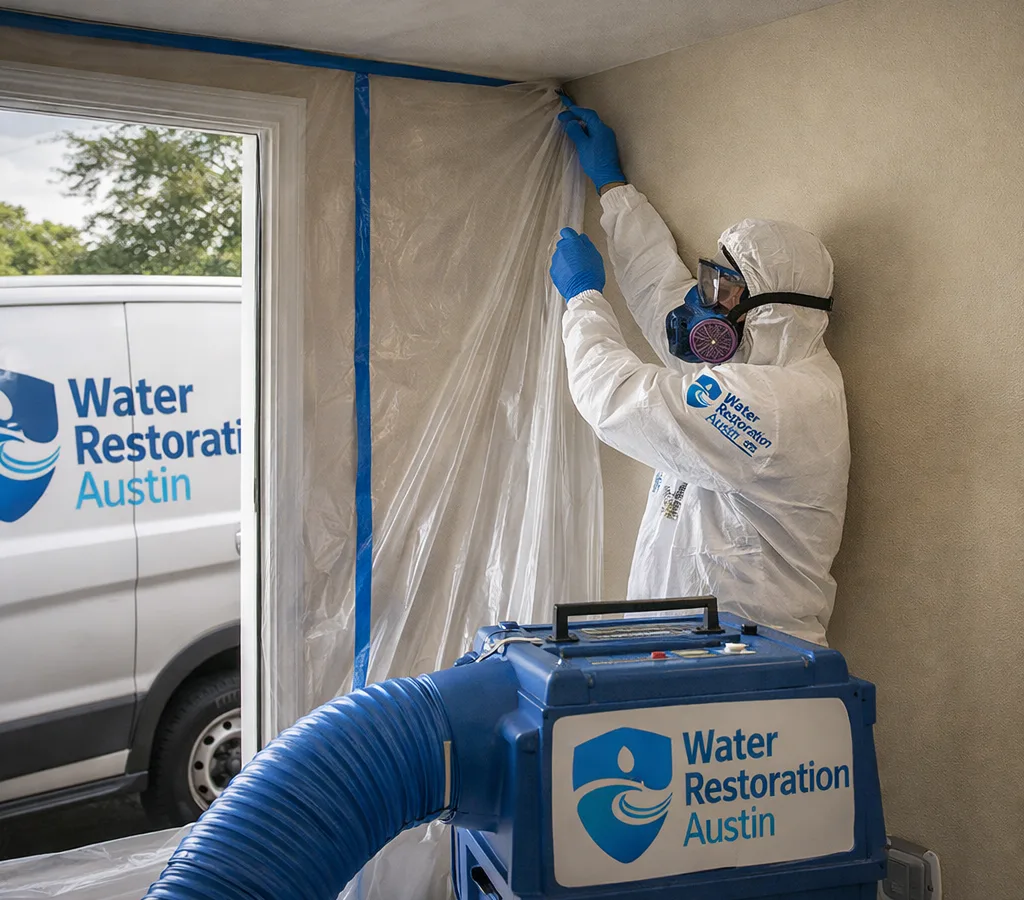
Contain growth and protect clean areas
Mold can start growing quickly when moisture stays trapped in drywall, insulation, cabinets, or flooring. In Austin, that often follows a plumbing leak, an HVAC condensate issue, a roof intrusion during a heavy storm, or a slow drip hidden in a wall cavity.
Mold remediation Austin work is not just “spray and wipe.” The goal is to stop the spread, remove contamination from materials that cannot be cleaned, and restore indoor air quality with controlled drying, filtration, and detailed cleaning.
Water Restoration Austin provides mold remediation for homes and small commercial spaces across Austin, TX. If you are also dealing with the source of moisture, our team can coordinate the full response through water restoration in Austin so drying, remediation, and repairs follow a clear sequence.
Controlled removal and air cleaning
A proper remediation plan starts with the question: where is the moisture and how far has mold traveled? Surface growth on a bathroom ceiling is one thing. Mold inside a wall cavity, under flooring, or behind a kitchen sink can be a very different scope.
Typical mold remediation work may include:
We walk you through what stays, what must be removed, and what has to dry before any reconstruction begins.
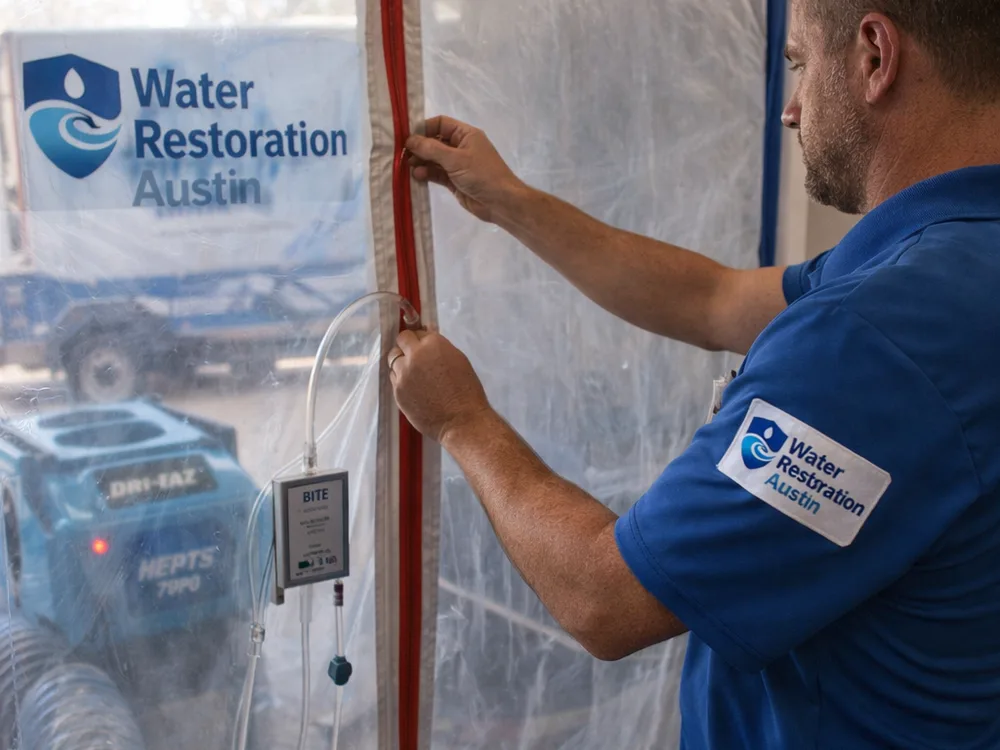
A controlled, documented response
You get a written plan that explains affected areas, containment approach, what materials are being removed, and what cleaning steps are included. That makes it easier to compare options and avoid partial fixes.
We prioritize containing the work zone and setting up HEPA filtration before disturbing materials. That reduces cross-contamination to hallways, bedrooms, and HVAC returns.
We use moisture readings to guide drying and to confirm when structural materials are ready for repair. If the moisture source is still active, remediation cannot hold.
Most projects happen while people still need access to kitchens, bathrooms, and bedrooms. We plan containment placement and work hours to limit disruption and keep pathways safe.
If the affected area is near return vents or inside a closet housing air handling equipment, we treat airflow as part of the risk. Filtration and isolation decisions change in those layouts.
When a sudden water event is involved, we can document conditions and the remediation steps taken. Coverage depends on the policy, but good documentation helps the claim process stay organized.
From assessment to repair planning
We identify suspected moisture sources and map visible and likely affected areas. If staining is present but growth is hidden, we plan the least disruptive access points to confirm conditions.
We isolate the work area with poly barriers, protect floors and pathways, and run HEPA air scrubbers to maintain negative pressure where the scope requires it.
Porous, mold-impacted materials are removed and bagged for disposal. We focus on clean cut lines so the rebuild is straightforward.
Remaining framing and surfaces are HEPA vacuumed and cleaned. We continue filtration during and after cleaning to capture airborne particulates generated by the work.
We dry the area to appropriate moisture conditions for the materials present. A dry, clean environment is what prevents recurring issues.
Once remediation is complete, we outline what repairs are needed to put the area back together and what has to happen first, such as final drying or clearance testing if requested.
Local building and moisture conditions
Mold problems in Austin often trace back to a few repeat scenarios. The best remediation plans account for where moisture hides and how the building is laid out.
In Mueller and other newer construction areas, mold can still develop around window leaks, builder gaps, or HVAC condensation lines. Newer does not mean immune; it changes the likely failure points.
Request Emergency ServiceAustin customer experiences
“We had a slow leak under the kitchen sink that turned into mold behind the cabinet. The crew sealed off the area, explained what had to be removed, and kept the rest of the house clean while they worked. The air scrubbers made a noticeable difference.”
“After a leak in the laundry room, they found wet drywall that looked fine from the outside. They opened the wall in a controlled way, dried everything, and cleaned up thoroughly. The plan was clear and the timeline matched what they told us.”
Answers before remediation begins
Mold remediation cost depends on the size of the affected area, what materials are impacted, and how much containment and demolition are required. Small, contained projects are often a few thousand dollars, while larger multi-room or HVAC-adjacent jobs can be significantly more. The biggest price drivers are hidden spread, the amount of porous material that must be removed, and whether drying equipment has to run for several days.
Many mold remediation projects take 1 to 3 days for containment, removal, and cleaning, with additional time if structural drying is needed. If the affected materials are saturated or the moisture source was active for a while, drying and verification can extend the schedule. Rebuild timelines are separate and depend on the trades involved and material availability.
Often you can stay home, but it depends on the location of the work zone, whether pathways like hallways must be contained, and individual sensitivity to airborne particles. Work near bedrooms, main HVAC returns, or kitchens can be more disruptive. We explain what areas will be restricted and how we will maintain safe access around containment.
Remediation only holds if the moisture problem is stopped and the area is dried to appropriate conditions. We can begin containment and removal to address active contamination, but long-term success requires fixing the leak, intrusion, or condensation issue and confirming materials are dry.
Testing can help when the source or extent is unclear, when documentation is required for a specific situation, or when a third-party clearance report is desired at the end. For many straightforward cases with visible growth and an identified moisture source, a well-defined remediation scope and proper containment are more important than pre-testing. If you want clearance testing after the work, we can coordinate timing so the area is ready.
Limit disturbance of the area, keep doors closed if possible, and avoid running fans that could move air from the affected space into clean rooms. If safe, stop the water source and document what you see. The next step is an on-site assessment so you know whether containment is needed and what materials are actually affected.
If you are seeing signs of mold or dealing with a recent leak, get an on-site assessment and a written remediation plan so you know the real scope before anything is torn out.
Call for Emergency HelpTell us what you are noticing—odor, staining, a recent leak, or visible growth—and where it is located. We will outline the containment approach, what needs to be removed, and what has to dry before repairs begin.