
Sample locations that match the concern
We document where each sample is taken and why, so results tie back to a specific room, wall, or HVAC zone rather than a vague “whole house” conclusion.
Serving Austin, Texas & surrounding areas
Mold testing • Austin, Texas
If you smell something musty, see staining, or had a recent leak, get a certified inspection with clear lab results and a written next-step plan you can act on.
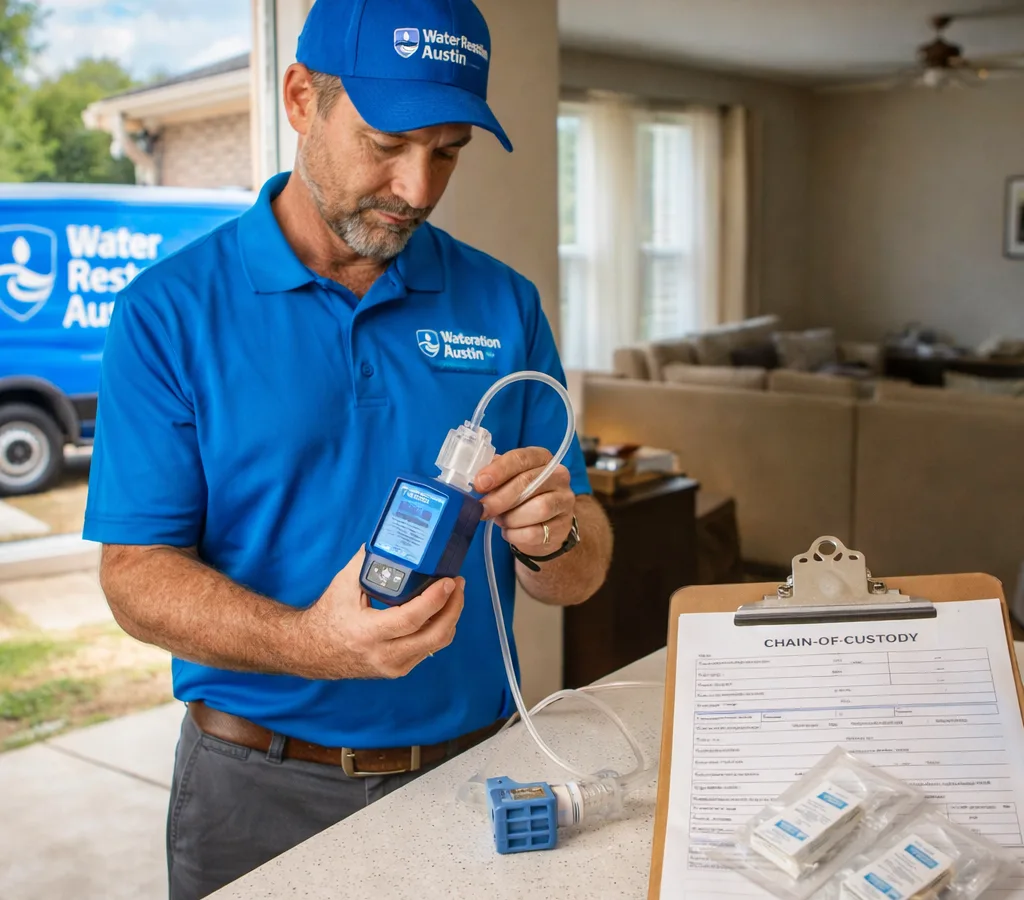
Know when testing changes the plan
Most people searching for mold testing Austin are trying to answer two questions fast: “Is this mold?” and “What do I do next?” Testing is most useful when it changes the plan: what areas to open, what to clean, what to remove, and what to fix so growth does not come back.
Consider scheduling testing when:
You should not wait when moisture is active. Mold is a symptom; moisture is the cause. If there is a current leak or wet building materials, the priority is stopping the source and drying the structure. After conditions stabilize, testing can document what is present and guide the scope.
Inspection, sampling and reporting
Water Restoration Austin provides mold inspection and sampling for homes and commercial spaces across Austin. The goal is a report that is easy to read and specific enough to guide real decisions.
Typical scope includes:
If testing indicates a remediation scope, we can help coordinate next steps. For active leaks or drying needs, many clients start with water restoration in Austin to stabilize the structure before further work proceeds.
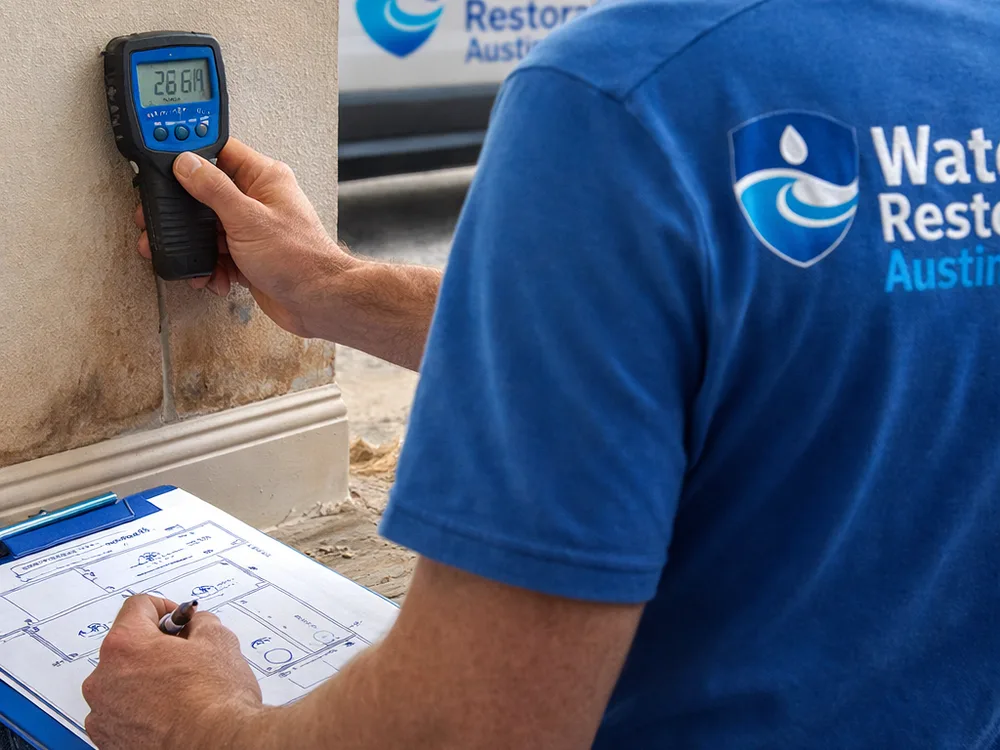
Specific evidence, practical guidance
We document where each sample is taken and why, so results tie back to a specific room, wall, or HVAC zone rather than a vague “whole house” conclusion.
You receive lab findings alongside what we observed on site, including visible growth, staining, and moisture measurements that help interpret results.
When a problem is confirmed, recommendations focus on the moisture source, containment needs, and which materials may require removal versus cleaning.
For a tenant file, seller disclosure, or buyer decision, we keep the language specific and supportable.
Testing does not “pass” or “fail” a house. We explain what was sampled, what was not, and which limitations—such as recent cleaning or weather—may affect interpretation.
When a leak or odor is time-sensitive, we prioritize quick inspection windows so you can make decisions before conditions change or repairs begin.
Austin building conditions
Austin buildings see a mix of drivers that can make mold harder to spot until it spreads. Warm weather for much of the year can keep indoor humidity elevated, and air conditioning systems run long hours. If condensate drains clog or a secondary pan overflows, moisture can collect in attics, closets, or around air handlers.
Hyde Park: Older homes may include crawlspaces or wall assemblies where small plumbing leaks go unnoticed longer.
East Austin: Rapid renovations can leave mixed materials behind, causing moisture behavior to vary from room to room.
Downtown and Rainey-area condos: Shared walls and stacked plumbing mean the source may not be inside the unit where an odor appears.
We approach each inspection with building science basics: find the moisture pathway, verify it with measurements, then sample in a way that answers the client’s decision. Testing without moisture context often creates more confusion than clarity.
Request Emergency ServiceFrom concern to written plan
You tell us what you are seeing or smelling, whether there was a recent leak, and which areas are most urgent, such as a nursery, HVAC closet, bathroom, or tenant space.
We inspect concern areas first, then expand to adjacent rooms or floors if moisture mapping indicates spread. We also note conditions that affect results, including open windows, recent cleaning, or ongoing construction.
If sampling is warranted, we collect the right sample types for the question you are trying to answer and document locations so results are defensible.
We coordinate lab submission with proper chain-of-custody and deliver a report that explains findings and recommended next steps in plain language.
If remediation is indicated, we outline likely scope drivers—including containment, affected materials, and HVAC considerations—so you can move forward with a clear plan.
Customer experiences
“We had a musty smell that would come and go and could not figure out where it was coming from. The inspection explained the moisture source, and the report was specific enough for our contractor to open the right area instead of guessing.”
“As a property manager, I needed documentation that was clear and professional. The sampling locations were well explained, and the recommendations helped us prioritize what to address first.”
“The biggest help was having someone explain what the lab results actually meant for our situation. We got a straightforward plan and timeline for next steps.”
If you need answers you can rely on, start with an inspection that ties moisture findings to lab results and ends with a written plan for what to do next.
Call for Emergency HelpClear answers before inspection
Mold testing cost depends mainly on how many areas need to be sampled and what sample types are appropriate for the question you are trying to answer. A small, targeted inspection with limited sampling is usually less than a multi-room or multi-floor investigation that needs multiple air and surface samples, plus HVAC-related sampling.
If you have visible growth and a confirmed moisture source, the immediate need is to fix the moisture problem and plan safe removal, not to prove mold exists. Testing is most useful when it changes the scope, such as confirming whether growth is localized or if adjacent rooms or HVAC circulation are involved.
Air samples help compare what is in the air in a specific room versus a reference area, while surface samples confirm what is growing on a specific material. We select the method based on the decision you need to make, such as whether an odor likely relates to an indoor source or whether a suspicious spot is microbial growth versus staining.
Lab turnaround is often a few business days, and timing can vary by lab workload and the analysis type requested. We also document field observations and moisture readings during the visit so you have immediate context while you wait for the lab report.
Testing can indicate whether conditions suggest an indoor source and can support targeted investigation, but it does not replace opening assemblies when evidence points to hidden moisture. Moisture mapping and careful inspection usually narrow the likely area first, then sampling helps confirm what you are dealing with.
In most cases, yes, because sampling is non-destructive and does not require opening materials. If an inspection indicates that invasive investigation or remediation is needed, we discuss precautions and how to reduce exposure for sensitive occupants.
Keep the home in normal living conditions as much as possible, because major changes like airing out the house or running fans in suspect rooms can affect what an air sample captures. If there is an urgent moisture issue, address that first; otherwise, we will guide you on preparation when scheduling.
Yes. We handle mold inspection and testing for rental homes, multi-family properties, and commercial spaces, and document findings in a way that is useful for tenant communication, maintenance planning, and project coordination.
Share what you are seeing or smelling and any history of leaks. We will recommend the right level of mold testing and provide a written report that supports your next decision.