Water cleanup • Austin, Texas

Water Cleanup Austin

Fast extraction, professional drying, and careful documentation to limit damage and get your space back to normal.

24/7 emergency response Austin local team Same-day equipment setup
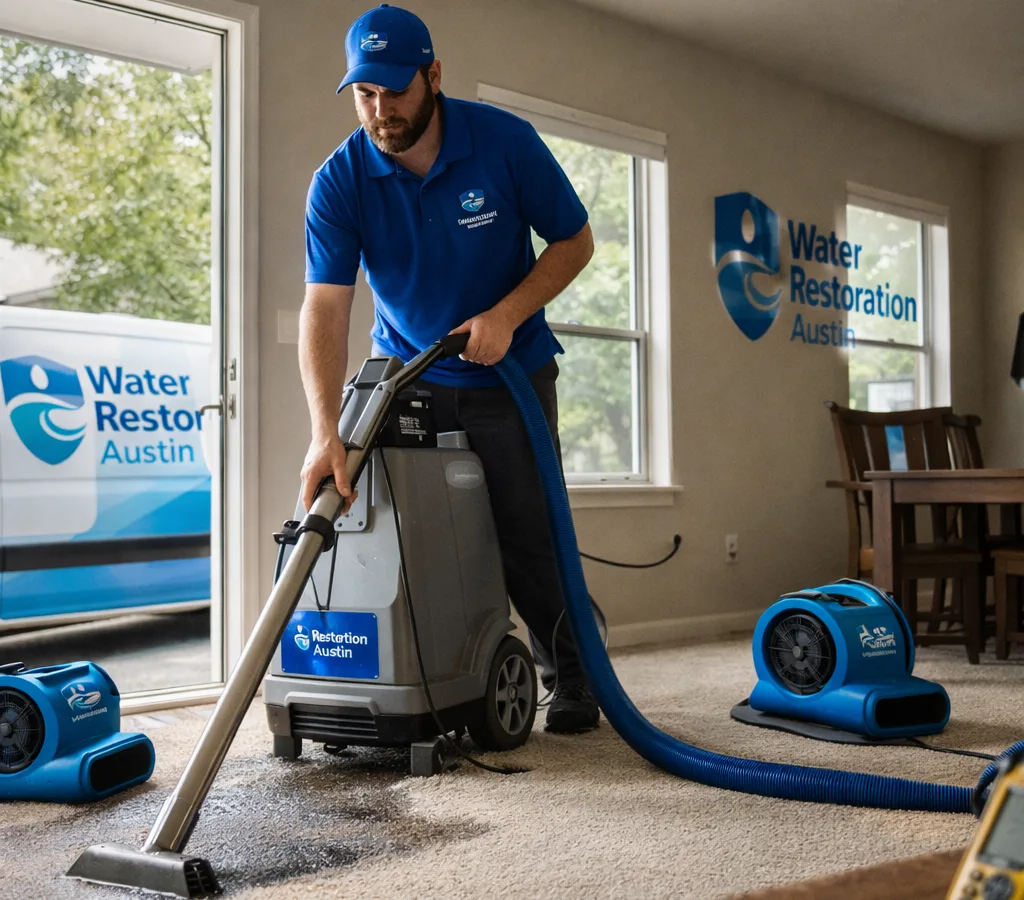
Technician performing water extraction with a commercial extractor in an Austin home with air movers and moisture meters staged nearby

Extraction, drying and clear updates

What to expect when you need water cleanup in Austin

If you are searching for water cleanup Austin, you are likely dealing with a leak, an overflow, or water that showed up where it should not be. The first goal is simple: remove the water and dry the structure before materials swell, floors cup, cabinets delaminate, or mold has the chance to take hold.

At Water Restoration Austin, our water cleanup work is built around three priorities:

  • Stop the spread: extract water fast and protect adjacent rooms.
  • Dry the structure, not just the surface: verify moisture levels in drywall, baseboards, framing, and subfloors.
  • Keep you informed: clear scope, photos when helpful, and straightforward updates as conditions change.

Austin has plenty of slab foundations, mixed flooring types, and open-plan layouts that let water travel farther than expected. When water gets under LVP, into grout lines, or behind baseboards, the right equipment and verification matter as much as speed.

Request Emergency Service

A complete mitigation scope

Water cleanup Austin: what the service includes (and why it matters)

Water cleanup is more than vacuuming up a puddle. A complete job is a controlled process that reduces long-term damage and avoids re-wetting.

Typical scope includes:

  • Source and safety check: confirm the water is stopped and the area is safe to work in. If outlets, appliances, or HVAC components were exposed, we plan around that risk.
  • Water extraction: truck-mount or portable extraction based on access, volume, and flooring. In many homes, removing water quickly is the difference between drying in place and needing removal.
  • Controlled demolition when needed: remove only what cannot be dried properly, such as saturated carpet pad or swollen baseboards. The goal is to keep the footprint as small as possible.
  • Drying and dehumidification: air movers, dehumidifiers, and containment when appropriate drive moisture out of materials instead of into the rest of the house.
  • Moisture mapping and daily checks: meter readings confirm progress. Drying is finished when the structure returns to acceptable moisture levels, not when it simply looks dry.
  • Cleaning and odor control: depending on the category of water, we apply appropriate cleaning and antimicrobial steps.
  • Documentation: notes and photos help you track what happened and what was done.

If you are also dealing with broader restoration decisions, our team can coordinate the next steps as part of water restoration in Austin so the cleanup and the rebuild do not work against each other.

Request Emergency Service
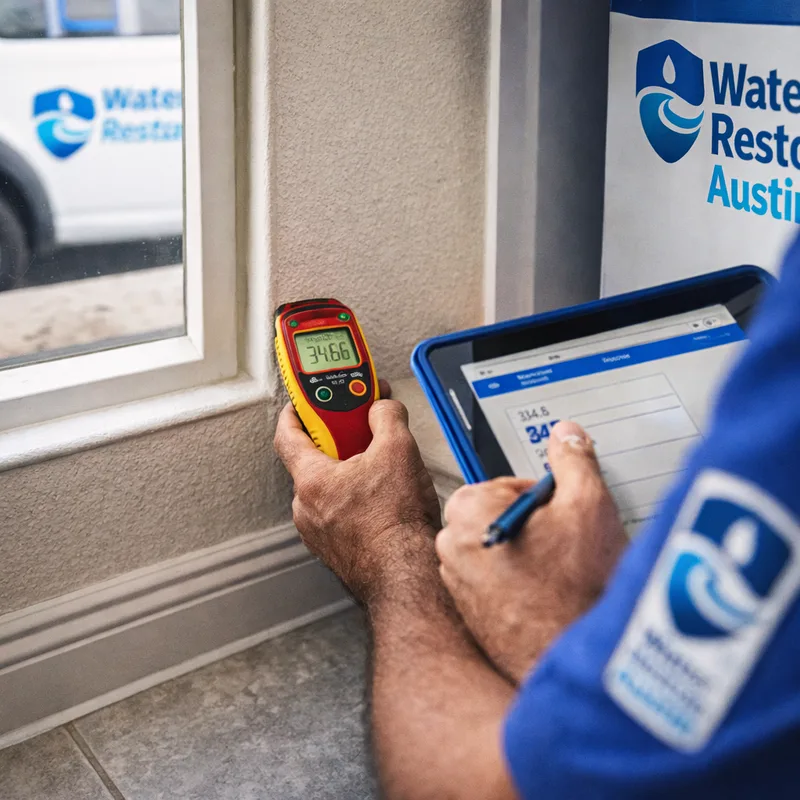
Technician recording moisture meter readings from drywall and baseboard near a kitchen or laundry area

Residential and commercial response

Common water cleanup situations we handle

Supply line and fixture leaks

Slow leaks under sinks, behind toilets, or from washing machine supply lines often soak cabinets and drywall before anyone notices. We focus on drying behind and below the visible wet area so moisture does not linger in cavities.

AC and condensate overflows

Austin heat keeps systems running hard. When condensate lines clog or pans overflow, water can show up in hallways and around returns. We dry affected drywall and flooring while watching for hidden moisture paths.

Water heater failures

A ruptured tank can release a lot of water quickly. We prioritize fast extraction and drying of adjacent rooms since water can travel under baseboards and into closets.

Appliance and plumbing overflows

Dishwasher, refrigerator, or laundry overflows are common sources of water under floating floors and into subfloors. We evaluate whether flooring can be dried in place or needs selective removal to dry the structure correctly.

Storm-related water intrusion

When water enters around doors, windows, or low points, we dry the interior and document conditions clearly so next steps are easier to plan.

Commercial water cleanup

For offices and storefronts, we focus on fast stabilization, safe access, and keeping disruption predictable so you can plan around drying time.

Request Emergency Service

From assessment to verified dry

Our water cleanup process (start to finish)

01

On-site assessment and moisture mapping

We identify affected materials and how far the water traveled. That includes checking behind baseboards, at transitions between rooms, and near HVAC returns where moisture can move.

02

Extraction and protection of unaffected areas

We remove standing water, set floor protection where needed, and isolate the work area when it helps keep humidity from spreading through the home.

03

Targeted removal when drying in place is not realistic

Some materials trap water or break down when saturated. If removal is required, we keep it controlled and explain what is being removed and why before moving forward.

04

Structural drying with verification

Air movers and dehumidifiers run based on readings, not guesswork. We track progress and adjust equipment placement as the drying pattern changes.

05

Cleaning and final dry standard

We clean affected surfaces as appropriate for the situation and confirm that materials have returned to acceptable moisture levels before the job is considered complete.

Request Emergency Service

Austin construction and climate

Local considerations that change water cleanup in Austin homes

Two houses can have the same leak and require different water cleanup approaches. In Austin, we often see differences driven by construction style and flooring choices.

  • Slab foundations and hidden pathways: Water can travel along the slab and show up far from the original leak, especially near interior walls and flooring transitions.
  • Modern floating floors: LVP and laminate can trap moisture underneath. The top can feel dry while the subfloor stays wet, so we check edges, seams, and transitions with meter readings.
  • Older homes with layered materials: In areas like Hyde Park, older renovations can leave multiple flooring layers. That can slow drying and sometimes requires selective removal to prevent moisture from staying sandwiched.
  • High-demand cooling season: When the AC runs continuously, indoor humidity control becomes part of the drying plan. Dehumidification and airflow need to be balanced without pushing moisture into other rooms.

If your property is in Mueller or another newer build with a tight envelope and engineered materials, we pay close attention to moisture trapped behind trim and under flooring. In South Congress and similar mixed-use areas, access and parking can affect equipment staging, so we plan logistics up front.

Request Emergency Service

Customer experiences

Clear communication through every cleanup

“We had water in the hallway and two bedrooms after a plumbing issue. They explained what was wet, set up drying the same day, and kept checking moisture until the readings made sense. The updates were clear and the house never had that damp smell afterward.”
Mia R.
“Our dishwasher overflowed and the water went under the flooring. They walked us through what could be dried in place versus what needed to come up, and the work area was kept clean the whole time.”
Jordan L.
“Fast response and straightforward communication. They documented everything and didn't overpromise on timing, which helped us plan around the drying equipment in the house.”
Sam T.

Answers before mitigation begins

Water cleanup FAQs for Austin property owners

How quickly should water cleanup start after a leak or overflow?

Water cleanup should start as soon as you can safely do it, ideally the same day, because water spreads under flooring and into drywall cavities quickly. In Austin homes with floating floors or slab foundations, hidden moisture can travel farther than the visible wet area, so early extraction and moisture mapping help limit the footprint of damage.

How long does drying usually take after water cleanup?

Drying commonly takes a few days, but the real timeline depends on what got wet, how much water entered materials, and airflow access. A wet subfloor under LVP can take longer than surface water on tile, and we confirm progress with moisture readings rather than using a fixed day count.

Can you do water cleanup without removing drywall or baseboards?

Sometimes, yes, if the water exposure is limited and the wall cavity can dry effectively with proper airflow and dehumidification. If drywall is swollen, insulation is saturated, or moisture is trapped with no drying path, selective removal is often the safer choice to prevent lingering dampness.

What affects the cost of water cleanup in Austin?

Cost is driven mainly by the amount of affected area, the category of water, how much material needs removal, and how long drying equipment must run. Multi-room spread, water trapped under flooring, and cabinetry involvement typically increase labor and drying complexity, so an on-site assessment is the only way to give a reliable scope.

Is it safe to stay in the home while drying equipment is running?

Often it is, but it depends on the source of water, the affected rooms, and whether containment is needed. We explain what areas should be avoided, what noise and airflow to expect, and any steps that help drying move faster, such as keeping doors closed in the drying zone.

What should I do right away before your team arrives?

Stop the water if it is safe, avoid using outlets or appliances in wet areas, and move small valuables out of the affected zone if you can do it without stepping into hazards. If possible, take a few photos of the source and visible water spread; that helps document conditions before extraction changes the scene.

Need water cleanup help today?

Tell us what happened, what rooms are affected, and when the water started. We will walk you through the next steps, provide a clear scope, and start mitigation quickly to limit damage.