
Clear scope before demo
You get a written plan that defines the affected area, what materials are being removed, and what surfaces are being cleaned, so the job stays controlled.
Serving Austin, Texas & surrounding areas
Mold removal • Austin, Texas
If you are dealing with visible growth, musty odors, or water damage, our team can inspect, contain, remove, and restore the area with a clear scope before work starts.
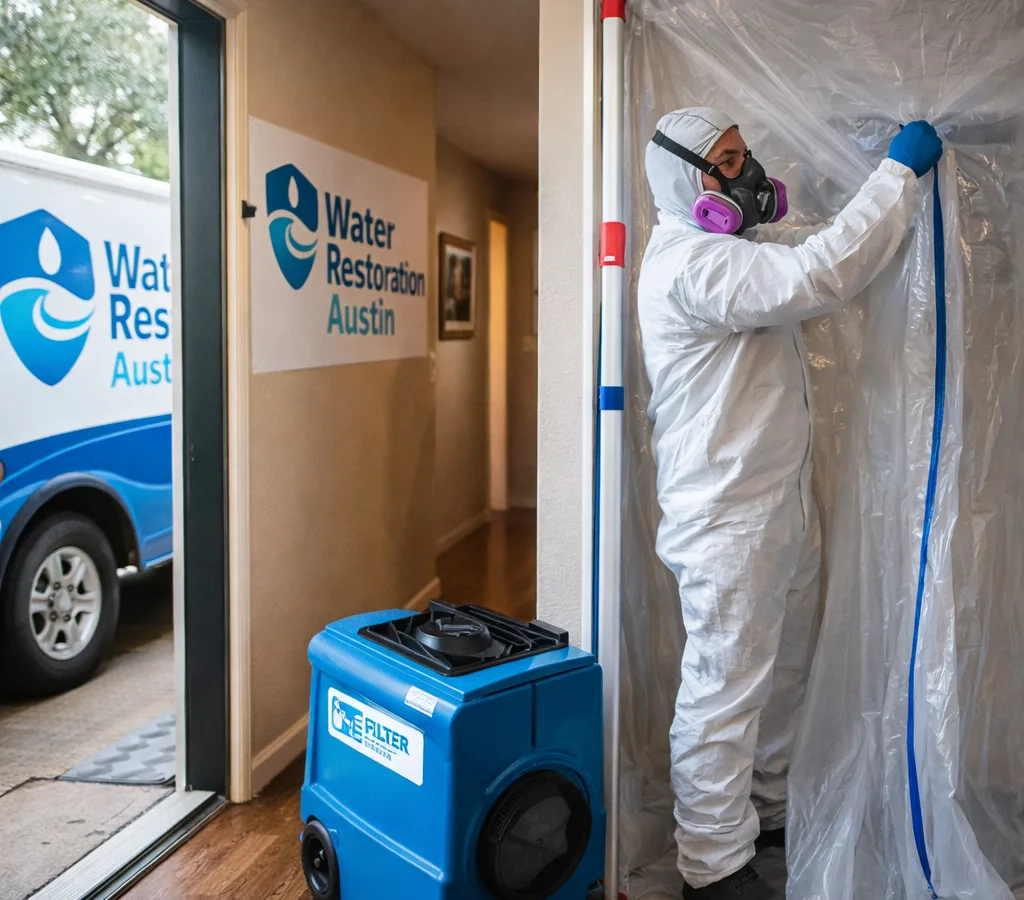
Practical first steps
Searching for mold removal Austin usually means something already feels wrong: a persistent musty smell, staining around a vent, or drywall that never quite dried after a leak.
Start with two practical steps:
In Austin homes, air conditioning runs a lot and indoor humidity can stay high. That combination makes small moisture issues matter. A damp closet on an exterior wall, a slow bathroom leak, or a wet subfloor after a dishwasher incident can feed growth even when the rest of the house seems fine.
Our team at Water Restoration Austin can look at the affected materials, explain what must be removed versus cleaned, and outline the safest way to contain and remediate the area.
Controlled remediation
Proper mold remediation is a controlled cleanup process, not a quick spray-and-wipe. The goal is to remove contaminated materials and clean remaining surfaces while keeping spores from traveling to clean rooms.
Typical mold removal work includes:
What it does not include: guessing. A legitimate plan states what areas are included, how far removal goes, how containment is built, and what passes are completed before normal use resumes.
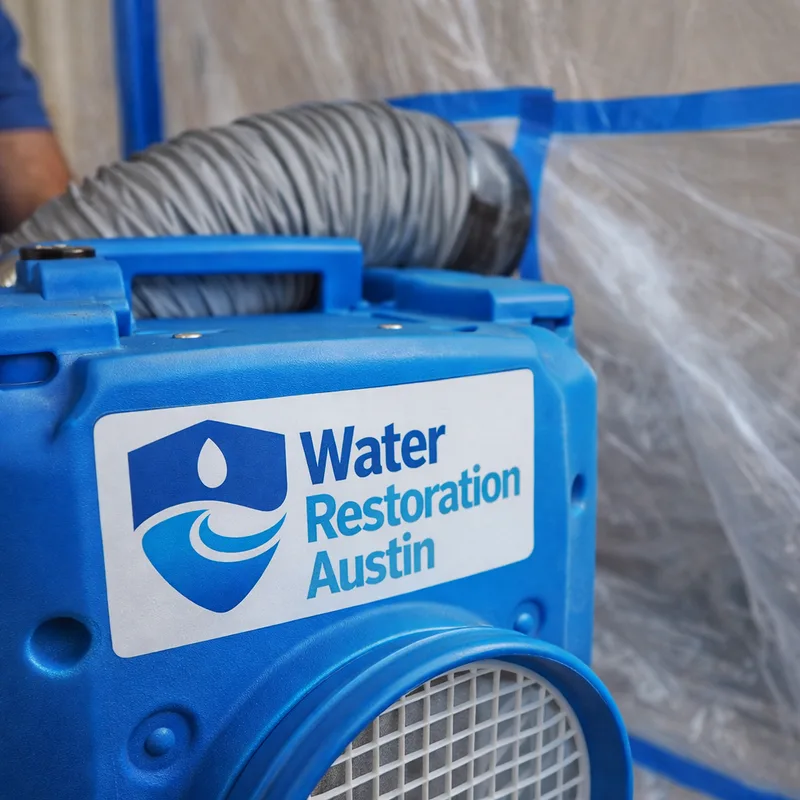
Controlled from start to finish
You get a written plan that defines the affected area, what materials are being removed, and what surfaces are being cleaned, so the job stays controlled.
We isolate the work zone so spores and dust stay where the work is happening, especially near bedrooms, hallways, or return vents.
HEPA air scrubbers and HEPA vacuums reduce airborne particulate during demolition and cleaning, helping keep adjacent spaces cleaner.
Some items can be cleaned; others must be removed. We explain the difference plainly so you are not replacing what can be safely salvaged.
Musty odor usually tracks back to damp materials. Once removal and drying are handled, we add deodorizing only where it makes sense.
After remediation, we can help map the rebuild steps so the space returns to normal use without unnecessary delays between trades.
From inspection to restoration
We walk the area with you to understand what happened, when it started, what has been wet, and what changed. We also check adjacent materials because mold can travel behind baseboards and beneath flooring after a leak.
Mold remediation works when moisture is controlled. If materials remain wet, we outline the drying steps needed so removal does not stop short of the real problem.
We set barriers and establish filtration in the work zone. For areas connected to hall returns or tight corridors, this step is especially important to reduce migration.
Contaminated porous materials are removed. Remaining framing and hard surfaces are HEPA vacuumed and cleaned, with close attention to edges, corners, and fastener lines where residue often remains.
We review what was done, what is ready for rebuild, and what should be monitored. If you want us to handle repairs too, we can outline the restoration scope and sequencing.
Austin moisture conditions
Mold is a moisture problem first. In Austin, we commonly see it where water is hidden or airflow is limited:
Construction patterns can affect what we find. Older central Austin homes often have mixed materials and remodeled additions where transitions hide leaks. In newer Mueller builds, tight building envelopes make ventilation and moisture control important, so small issues around an AC drain or bathroom exhaust can create odors quickly.
If the concern started after a leak or flooding, our team can also help with related water restoration in Austin so the conditions that caused the mold are handled correctly.
Request Emergency ServiceCustomer proof
“We found mold behind the baseboards after a small leak in the laundry room. They explained what had to come out, set up containment, and the house never smelled worse during the work. The plan was clear and the rebuild steps were easy to follow.”
“Musty odor kept coming back in a closet on an outside wall. They tracked the damp area, removed the affected drywall, cleaned the framing, and the smell was gone once everything dried out.”
Straightforward scope and pricing
Mold removal pricing depends on scope and access. The biggest cost drivers are the size of the affected area, which materials are contaminated, and how much containment is required to protect the rest of the property.
General, non-binding ranges you may see include:
Your actual price changes based on:
We aim to keep the estimate simple to understand: what area is included, what gets removed, what gets cleaned, and what restoration work is separate so you can budget for the full project.
Answers before remediation
Scheduling depends on current demand and how urgent the situation is, but many jobs can be assessed quickly and started soon after a clear scope is agreed. If the area is near living spaces or an HVAC return, early containment and air filtration can be prioritized while the full plan is finalized.
Testing is not required for every remediation job because visible growth plus moisture damage already indicates what must be removed or cleaned. If you need documentation for a property transaction or want to confirm conditions in a hidden area, testing can be discussed during inspection and coordinated with the remediation plan.
Sometimes, when the affected material is non-porous and contamination is truly limited to the surface. Drywall and insulation are porous, so when mold is established inside or behind them, removing those materials is usually the reliable approach.
Yes, if the moisture source and impacted materials are addressed. Odor typically comes from damp, contaminated porous materials or hidden cavities. Once those are removed and the area is dried, remaining odor can be treated with targeted deodorizing if needed.
It depends on the work-zone location and home layout, but many projects allow normal occupancy outside the contained area. When work is near bedrooms, narrow hallways, or shared ventilation, we explain practical steps to reduce exposure, including keeping doors closed and limiting traffic near containment.
Many smaller remediation projects take 1 to 3 days of on-site work. Larger or more complex situations can take longer, especially if drying is required before materials can be rebuilt. During inspection, we can provide a realistic timeline based on access, containment needs, and demolition scope.
Avoid disturbing the area, do not run fans that blow air from the affected space into other rooms, and clear a simple path for equipment. If a leak is active, shut off the water source if you can do so safely, then document visible damage with photos.
Tell us what you are seeing and where it is happening. We will walk the area, explain containment and removal options, and provide a straightforward scope and schedule for your Austin property.