Water damage repair • Austin, Texas

Austin Water Damage Repair

Water inside a building spreads fast. Get a local team on site to stop the source, dry the structure, and repair the damage with a clear written scope.

24/7 emergency response Austin local team Written repair scope
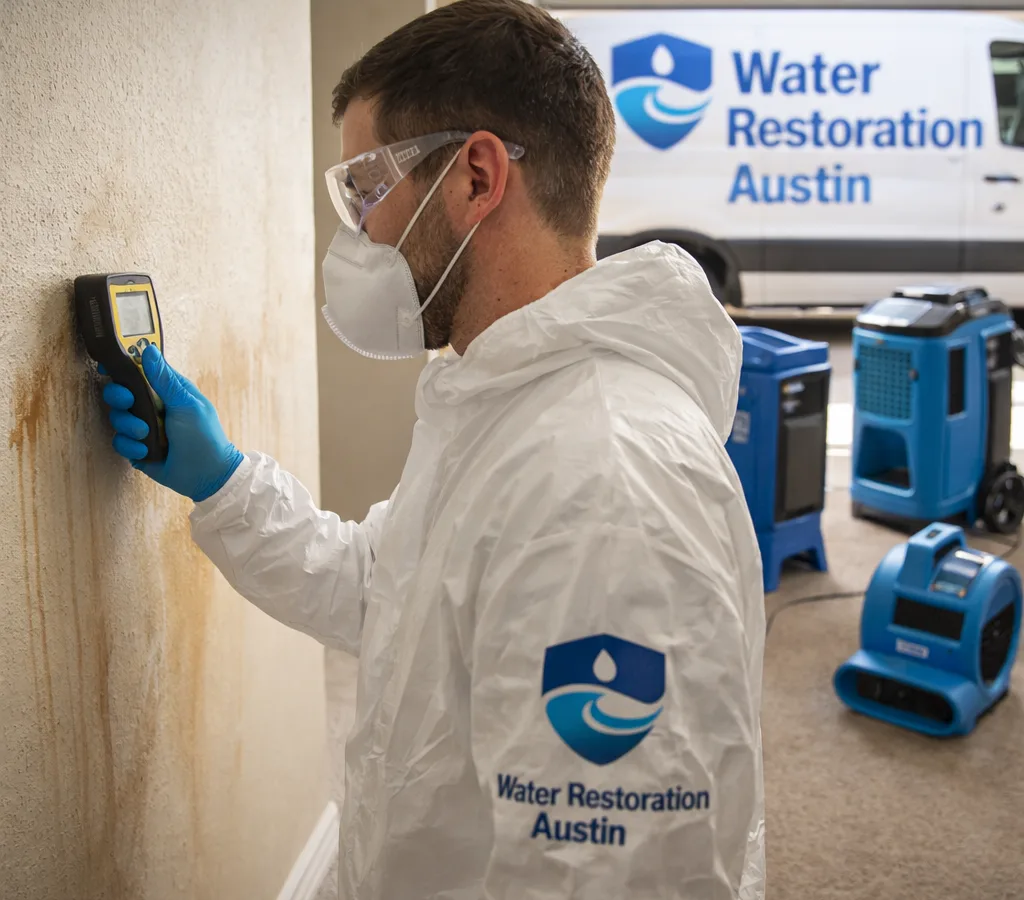
Technician in protective gear checking a water-stained Austin home wall with a moisture meter while drying equipment runs nearby

Dry first, then repair correctly

What to expect when you need water damage repair in Austin

If you are dealing with a leak, overflow, or storm-related intrusion, austin water damage repair starts with two priorities: stop the water and protect the building materials that can be saved. Drywall, trim, insulation, and flooring can all hold moisture long after the visible water is gone, and that is what drives swelling, staining, odor, and hidden deterioration.

Water Restoration Austin handles Austin water damage for homes and businesses with an approach that stays practical:

  • Confirm the source and document the affected areas
  • Map moisture in walls, ceilings, and floors—not just what you can see
  • Set drying equipment and monitor until materials hit dry standards
  • Repair and rebuild areas that cannot be dried back safely

The team also provides water restoration in Austin as part of the same start-to-finish process.

Request Emergency Service

Material-specific drying and repair

Austin water damage repair that accounts for how buildings are built

Repair work goes better when the drying plan matches the materials.

In Austin you will see a mix of slab-on-grade homes, pier-and-beam construction, and a wide range of interior finishes. Water can move differently depending on where it starts:

  • Slab homes: water can travel under flooring and into base plates before it shows up.
  • Pier-and-beam: moisture can build up under the floor system and affect subflooring or insulation.
  • Multi-story townhomes and condos: water often migrates downward through wall cavities and around plumbing chases.

We use moisture meters and, when appropriate, thermal imaging to locate wet materials so repairs are targeted. That helps avoid removing more than necessary while still addressing the parts that will not dry in place.

In Central Austin, older plaster and mixed-era renovations make the inspection step especially important because patching and texture matching should be planned before demolition. Newer drywall and engineered flooring also require fast drying to help prevent warping and joint failure.

Request Emergency Service
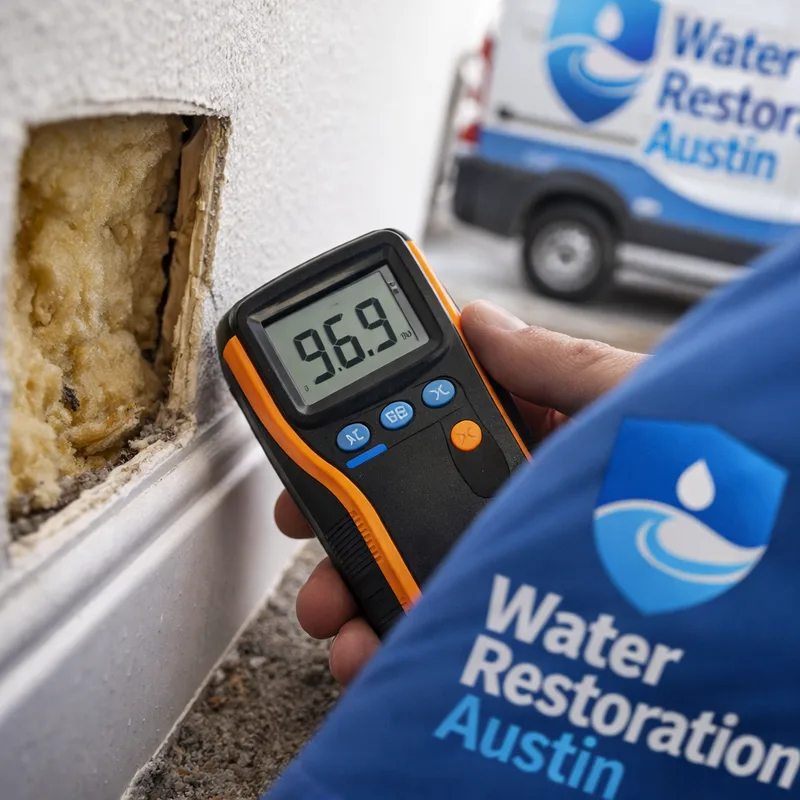
Moisture meter reading on drywall beside baseboard trim with a targeted opening revealing damp insulation

Source-specific restoration

Common causes of Austin water damage and what repairs usually involve

Supply line or fixture leaks

Water under sinks, behind toilets, or at washing machine hookups often soaks cabinets, drywall, and flooring edges. Repairs may include cabinet toe-kick replacement, drywall cut-outs, insulation replacement, and flooring transitions once dry.

HVAC and condensate issues

Clogged condensate drains or overflow pans can wet ceilings, walls, and closet floors near the air handler. The right fix includes correcting the drain issue, drying the cavity, then restoring sheetrock, texture, and paint.

Water heater failures

A leaking tank can dump a lot of water quickly and wick under adjacent rooms. The repair scope often includes baseboards, door casings, perimeter drywall, and flooring sections that delaminate or cup.

Roof or window intrusion during heavy rain

Water entering from above can spread across ceiling drywall and into insulation before dripping shows. Repairs typically require drying the attic or ceiling cavity and rebuilding damaged ceiling areas after the leak path is addressed.

Overflow and drain backups

Sinks, tubs, or floor drains that overflow can saturate multiple rooms. The work plan depends on what the water contacted, how far it traveled, and whether porous materials can be dried back safely.

Commercial unit leaks and multi-tenant impacts

In offices or retail spaces, water can affect adjacent suites and shared walls. We document moisture boundaries, coordinate access, and schedule repair work to reduce downtime where possible.

Request Emergency Service

From source control to closeout

Our process for water damage repair Austin property owners can plan around

01

Safety check and source control

We identify where the water is coming from and what it touched. Electrical concerns, ceiling sag, or wet insulation are stabilized before other work begins.

02

Moisture inspection and documentation

We measure moisture and outline a written scope separating materials that can be dried from those requiring removal and rebuild.

03

Drying setup and containment

Air movers, dehumidifiers, and targeted drying methods are set for the affected materials. Containment helps control dust and keeps the remaining space more livable.

04

Monitoring until dry standards are met

We track moisture levels and adjust equipment placement so drying remains efficient and consistent across the affected footprint.

05

Repair and rebuild

Once the structure is dry, we complete needed drywall replacement, texture matching, paint, trim, and other finish work.

06

Final walkthrough and closeout

You receive a final review of repaired areas and applicable documentation for your records, including photos and moisture readings.

Request Emergency Service

Drying, containment and finish repair

What water damage repair work looks like in real homes and buildings

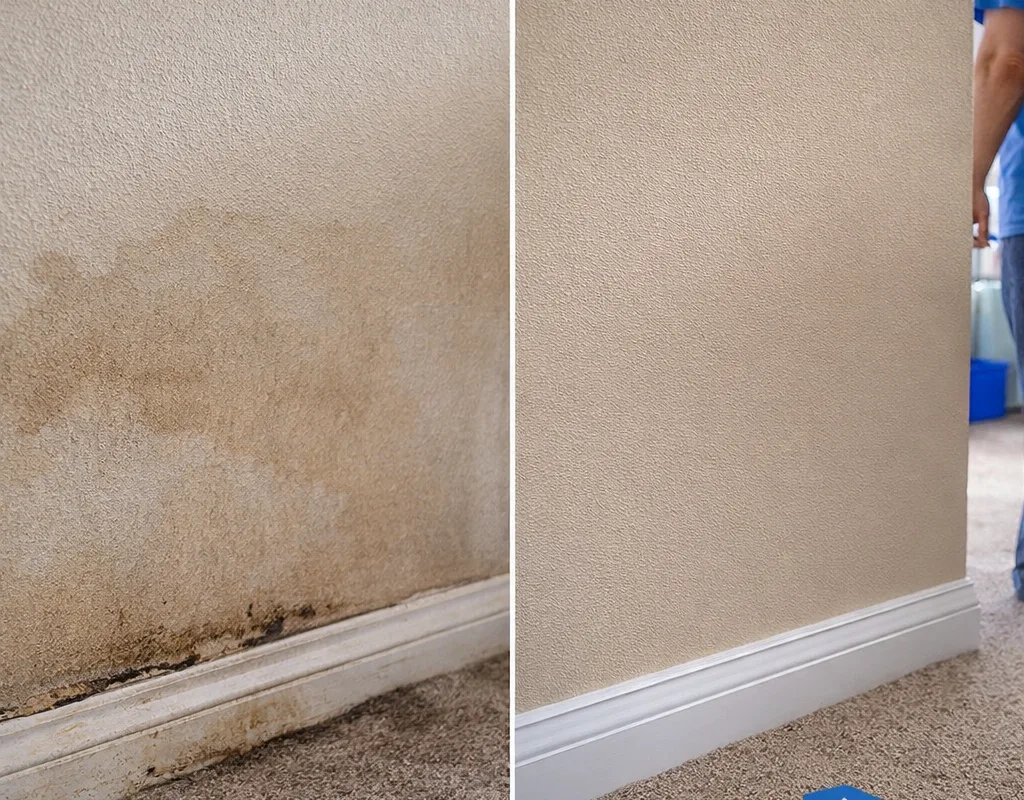
Before and after living room wall showing water-stained drywall and swollen baseboard restored with matched texture, paint, and new trim
Drywall and trim restoration after a supply line leak.
Technicians setting air movers and a dehumidifier in a protected hallway beside a doorway containment barrier
Drying setup with containment to limit dust and disruption.
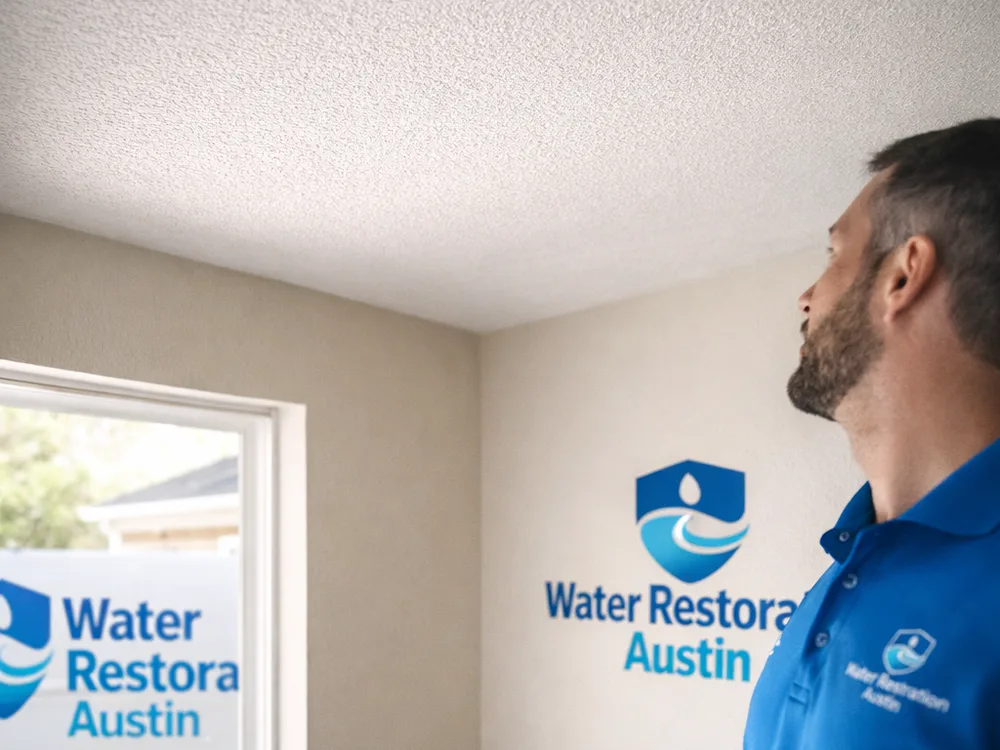
Repaired ceiling photographed in natural light showing blended texture and consistent paint finish
Ceiling repair after an upstairs overflow.
Request Emergency Service

Customer experiences

Clear scopes make stressful repairs easier to navigate

“We had water under the flooring that did not look that bad at first. The inspection showed how far it traveled, and the drying plan made sense. Once it was dry, the repairs were clean and the paint match was solid.”

Alyssa R.

“They explained what had to be removed versus what could be dried back. The scope was clear, and the rebuild stayed on track. It helped a lot during a stressful week.”

Mark T.

Answers before work begins

FAQs about Austin water damage repair

How fast should I start water damage repair after a leak?

You should start the same day whenever possible, because moisture spreads into drywall, insulation, and flooring edges quickly. Even if the surface looks dry, water can stay trapped in wall cavities and under floor coverings, which changes the repair scope and can increase the amount of material that has to be removed.

What is the difference between drying and repairs?

Drying removes moisture from structural materials using dehumidifiers, air movement, and monitoring, while repairs restore what was damaged or removed. Many projects need both steps: drying first to prevent ongoing deterioration, then rebuild work like drywall replacement, texture, paint, trim, and flooring repairs.

How long does water damage repair usually take?

Most timelines depend on how wet the structure is and how many materials are affected, but drying often takes several days and repairs can take additional days after that. The best way to get a reliable schedule is to measure moisture, define what will be rebuilt, and sequence trades so finishes are completed after the structure is confirmed dry.

Will you need to cut holes in my walls or ceiling?

Sometimes, yes, because trapped moisture in a cavity can be hard to dry through intact surfaces. The goal is targeted access based on moisture readings, so openings are placed where they help drying and allow inspection, then they are repaired and finished once the area is dry.

Can you repair water damage in a condo or multi-unit building?

Yes, and the key is documenting moisture boundaries and coordinating access with building management and adjacent units when needed. In multi-story buildings, we pay close attention to how water migrated downward through penetrations and shared walls so repairs address the full affected area.

How is water damage repair cost determined in Austin?

Cost is driven by the category of water involved, how far it spread, what materials were affected, and the amount of demolition and rebuild required. A small localized repair might involve limited drywall and paint, while a larger loss can include flooring removal, cabinet work, and multiple rooms. The most accurate pricing comes from an on-site moisture inspection and a written scope that separates drying tasks from rebuild items.

What should I do before your team arrives?

If it is safe, stop the water source and move valuables away from wet areas, then avoid running HVAC if it is pulling humid air through affected spaces. Try not to tear out materials without a plan, because the pattern of moisture and staining helps confirm where water traveled and what should be opened for drying.

Visible warning signs need a moisture check

Staining, bubbling paint, warped flooring, or musty odors can signal water hidden behind the surface.

The next step is an on-site moisture check and a written plan that lays out drying and repair in order.

Call for Emergency Help

Get a clear plan for your water damage repairs

Tell us what happened and what areas were affected. We will schedule an inspection, map the moisture, and provide a straightforward scope to get your Austin property back to normal.