
Supply line and appliance leaks
Slow leaks under sinks, behind refrigerators, and at washing machines often soak cabinets and subflooring before anyone notices. We find the wet footprint and dry the structure, not just the visible surface.
Serving Austin, Texas & surrounding areas
Water remediation • Austin, Texas
When water gets into building materials, time matters. Our local Austin team responds fast, documents what happened, removes affected materials when needed, and dries the structure with professional equipment so you can move toward repairs with a clear plan.
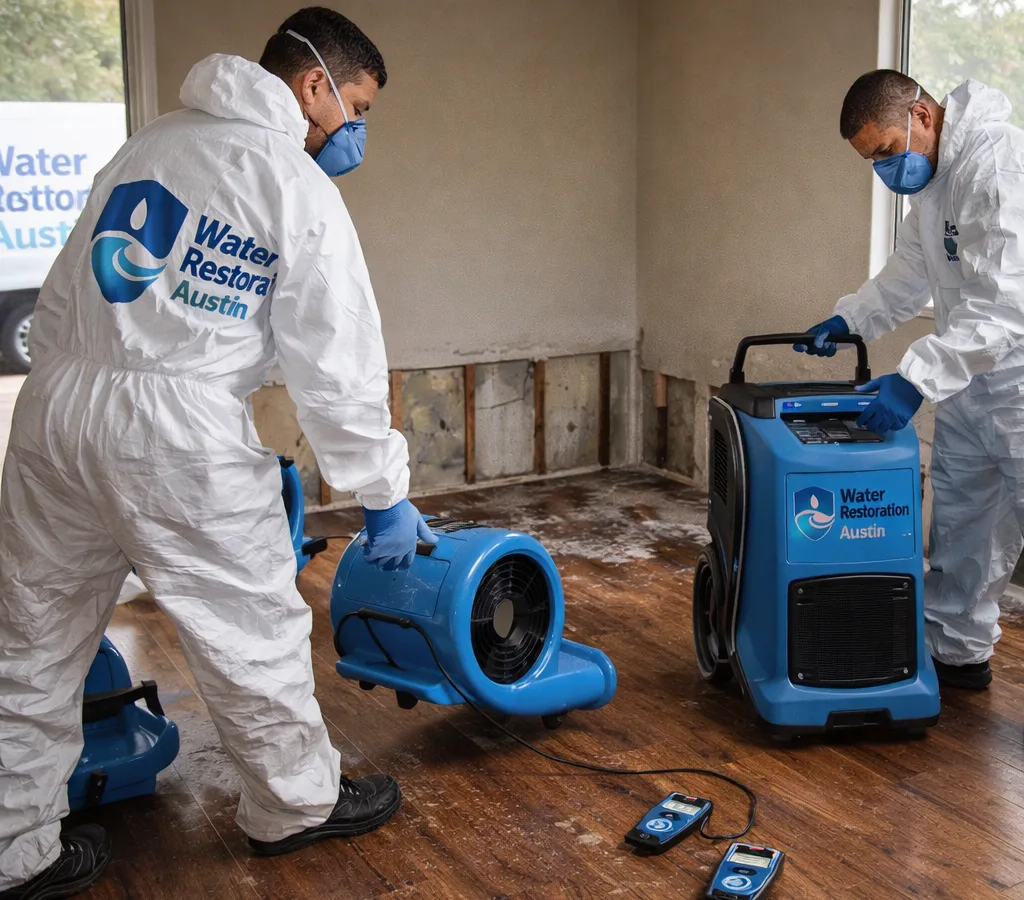
Measured cleanup and drying
Searching for water remediation Austin usually means you are dealing with a leak, overflow, or storm water that is already affecting floors, drywall, cabinets, or insulation. Remediation is the controlled process of removing water, drying the structure, and treating affected areas so materials can be repaired or replaced safely.
In Austin, water issues often show up fast because many homes have layered flooring systems, wall cavities that trap moisture, and tight interior spaces where humidity lingers. A proper response is more than setting a fan in the hallway. It starts with a moisture map, continues with extraction and targeted drying, and ends with verification so you are not rebuilding over hidden dampness.
Water Restoration Austin works across Austin, including ZIP 78723 and nearby areas, and keeps the focus on three outcomes: limit secondary damage, protect indoor air quality, and reach a documented, repair-ready condition.
If you are comparing companies, start with the fundamentals: the team should measure moisture rather than guess, explain what materials are likely salvageable, and give you a written scope that matches what they find on site. Water restoration in Austin may also form part of the overall recovery after a leak or storm event.
A controlled sequence
Water remediation is a sequence. Skipping steps, or doing them out of order, is how small leaks turn into warped flooring, stained ceilings, or odor that never fully leaves.
We inspect the source area and use moisture meters to map where water moved, including baseboards, drywall edges, and flooring transitions.
Standing water is extracted first. If materials are unsalvageable, we remove them in a controlled way to open the structure for drying and prevent contamination from spreading.
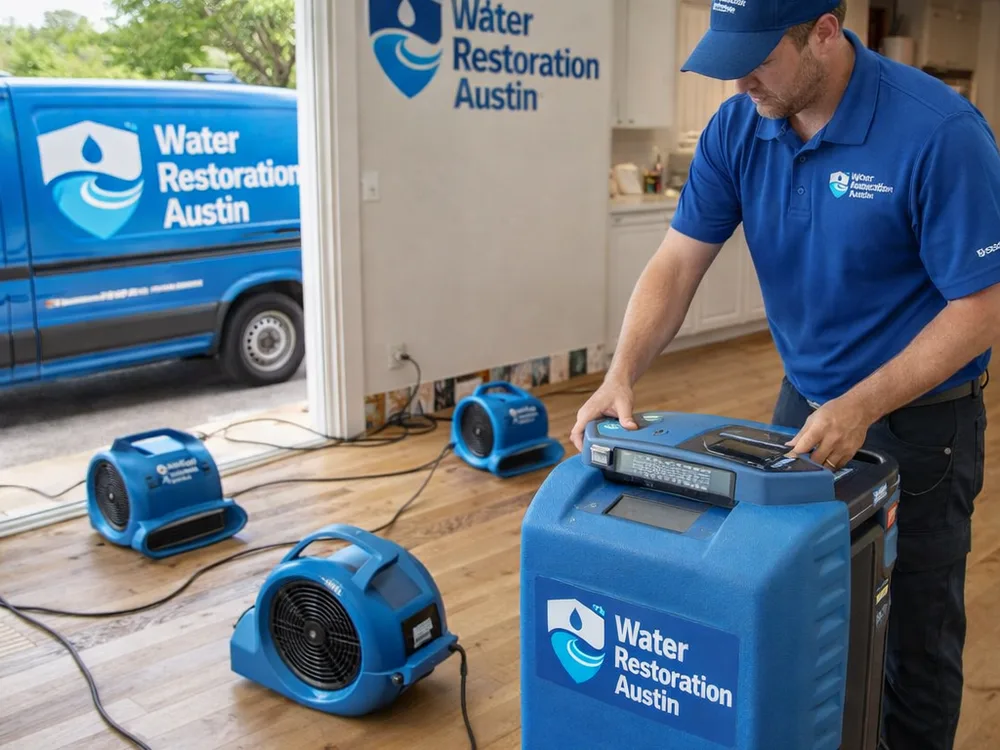
We place air movers and dehumidifiers based on the moisture map, not room size alone. Drying is monitored and adjusted as readings change.
If conditions warrant it, affected areas are cleaned and treated to reduce microbial risk. This is especially important when water has been sitting or reached porous materials.
You get a clear record of what was wet, what was removed, what equipment was used, and what readings supported the dry-out. This makes the repair phase and insurance conversations easier.
For people searching water remediation Austin TX, the non-negotiables are measurement, containment when needed, and verification before rebuilding.
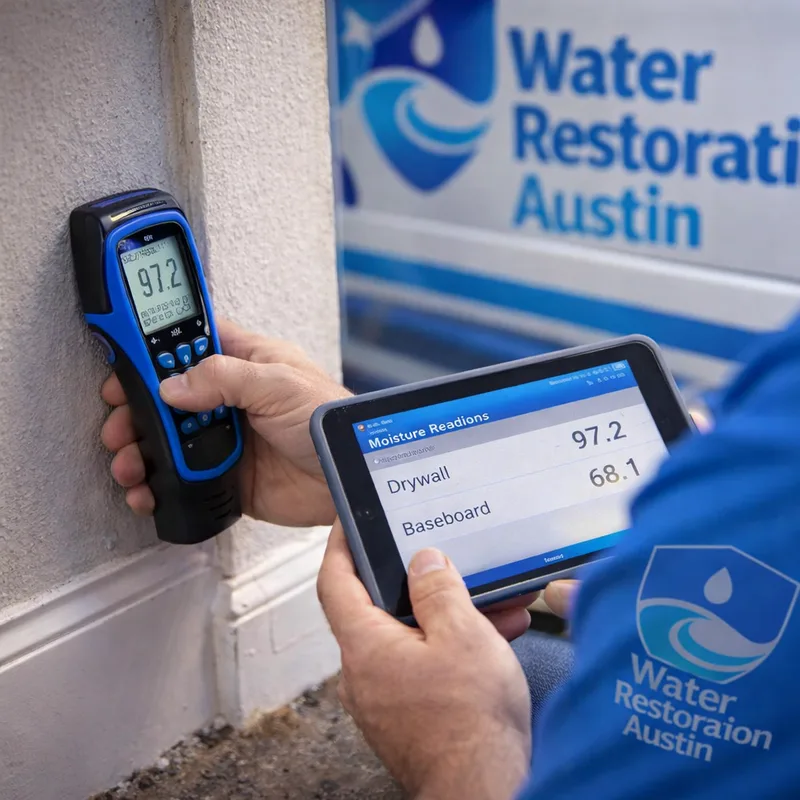
Residential and commercial response
Slow leaks under sinks, behind refrigerators, and at washing machines often soak cabinets and subflooring before anyone notices. We find the wet footprint and dry the structure, not just the visible surface.
Condensate line clogs and pan overflows can wet ceilings, closets, and wall cavities. Moisture mapping matters because the wet area is rarely limited to the stain you see.
Bathroom water can migrate under tile and into adjacent rooms. We set containment and drying plans that protect nearby finishes while reaching trapped moisture.
Water entering from above can saturate insulation and framing before appearing far away. We check attic and ceiling assemblies so drying targets the true path of water movement.
When water may contain contaminants, remediation requires higher-level controls: safer removal, careful cleaning, and disposal practices that reduce risk to occupants.
Shared walls, tenant spaces, and after-hours access complicate drying. We coordinate scopes so remediation work supports a faster return to normal operations.
From intake to verification
We gather what happened, when it started, and which areas are affected, then confirm that the source is stopped or can be isolated before remediation begins.
We document affected materials and outline what will be extracted, what may require removal, and how drying will be set up. You know the plan before equipment goes down.
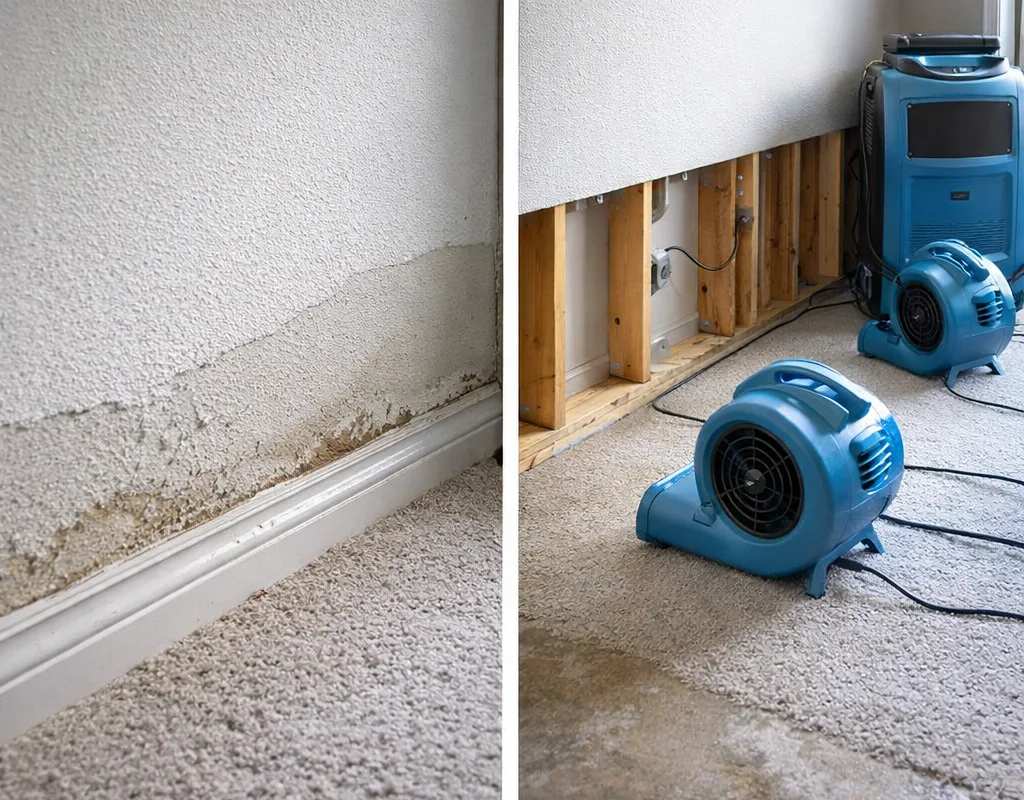
Standing water is removed first. If wet drywall, insulation, or flooring cannot dry safely in place, we remove only what is necessary to expose the structure and prevent spread.
Air movers and dehumidifiers are placed based on measured conditions, then adjusted as materials dry. We re-check moisture levels to track progress and avoid under-drying.
We clean affected areas and apply treatment when appropriate. The job closes with confirmation readings so you can move forward with repairs confidently.
Containment, removal and drying
Customer experiences
“We had water spread under the flooring farther than we thought. The crew showed us the moisture readings, explained what had to come out, and kept checking levels until it was actually dry. Having everything documented made the next steps a lot less stressful.”
“They responded quickly, set up drying the same day, and walked me through what was happening in plain language. The equipment placement and monitoring felt professional, not rushed.”
Answers before cleanup begins
Start water remediation as soon as the water source is stopped, because moisture moves into drywall, wood, and subfloors quickly and becomes harder to dry the longer it sits. The first visit typically focuses on moisture mapping, extraction, and a drying plan that prevents secondary damage such as swelling materials and lingering odors.
Cost is driven by the category of water, how far it spread, which materials are affected, how much removal is required, and how long drying and monitoring take. A small clean-water event caught early can be straightforward, while hidden moisture under flooring or behind cabinets usually increases labor and equipment needs.
Sometimes drywall can be dried if it is minimally affected and the situation involves clean water, but insulation and heavily saturated drywall often need removal to dry the framing properly. The decision should be based on moisture readings, the duration of wetness, and whether the water may be contaminated.
Many projects take several days of active drying and monitoring, but the timeline depends on what got wet, how saturated it is, and how accessible it is for airflow and dehumidification. The job should end with verification readings showing materials returned to an acceptable dry condition before repairs begin.
Stop the source if it is safe, shut off power to affected areas if water is near outlets or fixtures, and move items out of wet zones when possible. Avoid running household fans if the water may be contaminated, and avoid pulling up flooring or cutting drywall without a plan because that can spread contamination or create more repair work.
Yes. Remediation should include clear documentation of affected areas, moisture readings, equipment placement, and materials removed. That record is useful whether you are working with an insurer, property manager, or contractor completing repairs afterward.
An on-site assessment, moisture readings, and a written scope show what needs to happen, what can be saved, and what drying will take.
Call for Emergency HelpTell us what happened and which rooms are affected. We will walk the area, measure moisture, and outline a clear remediation plan that gets your property to a dry, repair-ready condition.