
Targeted containment
Poly barriers, zipper doors, and negative air setup when warranted to keep spores and dust from spreading to clean areas.
Serving Austin, Texas & surrounding areas
Mold assessment • Austin, Texas
Fast inspection, clear next steps, and safe remediation planning for homes and businesses across Austin. Get a written scope before any work starts.
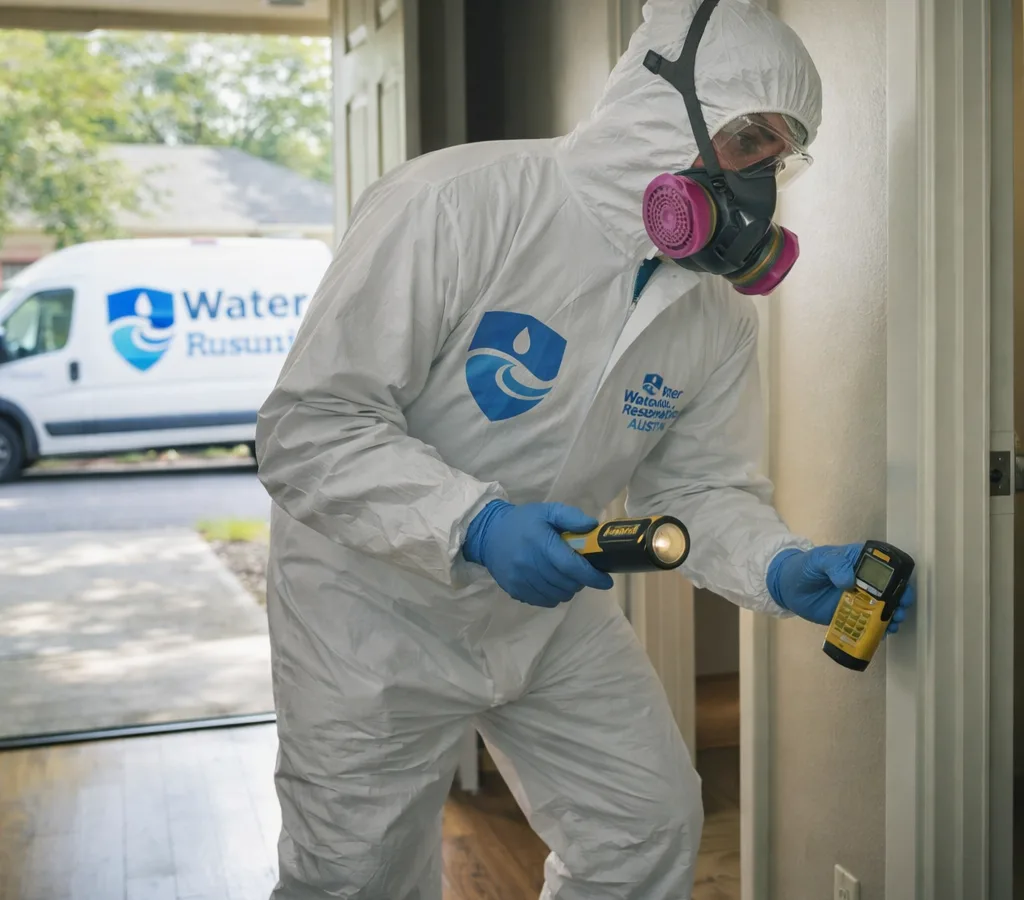
Assessment before remediation
If you are searching for a mold specialist Austin homeowners trust, you are probably dealing with one of two problems: you can smell or see growth, or you have had a water event and want to know what is happening inside the walls.
A mold specialist’s job is to find the moisture source, identify the affected materials, and define a safe, code-consistent plan to remove contamination without spreading it. That is different from simply spraying a cleaner and painting over stains.
Our team at Water Restoration Austin focuses on practical answers: what is wet, what is contaminated, how far it traveled, and what it takes to return the space to a safe, dry condition.
Measured findings, documented scope
A credible assessment starts with measurements and documentation, not guesses.
If you are also dealing with active water intrusion, the fastest path to controlling mold risk is stabilizing the environment first. Many clients start by clarifying whether they need water restoration in Austin as an immediate first step, then proceed with remediation based on measured conditions.
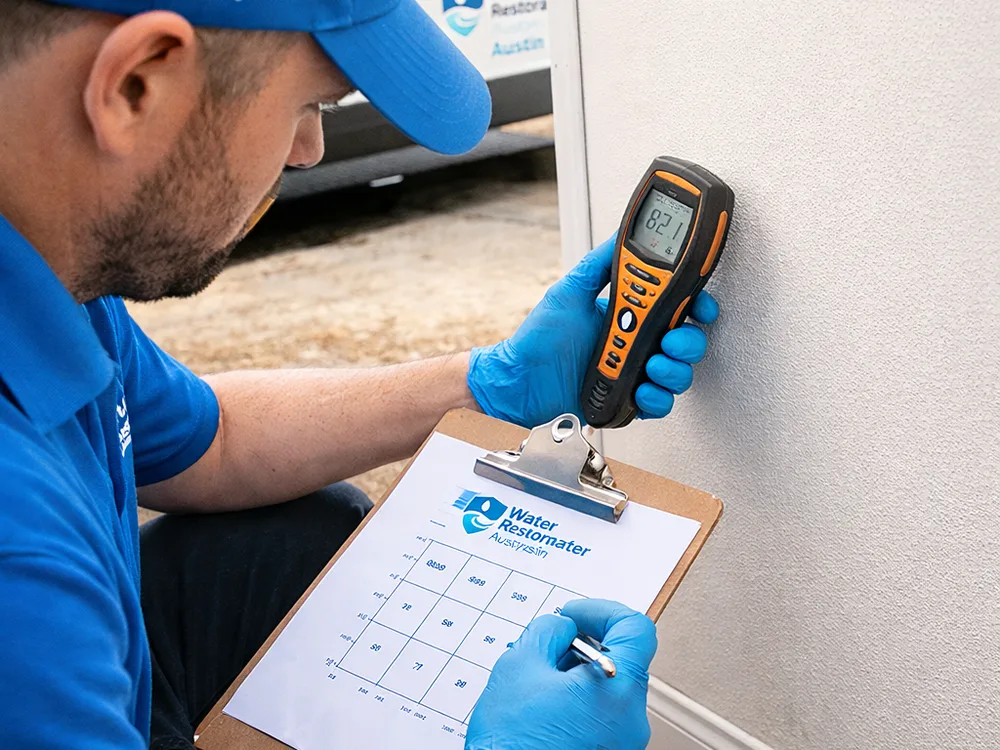
Controlled removal and recovery
Poly barriers, zipper doors, and negative air setup when warranted to keep spores and dust from spreading to clean areas.
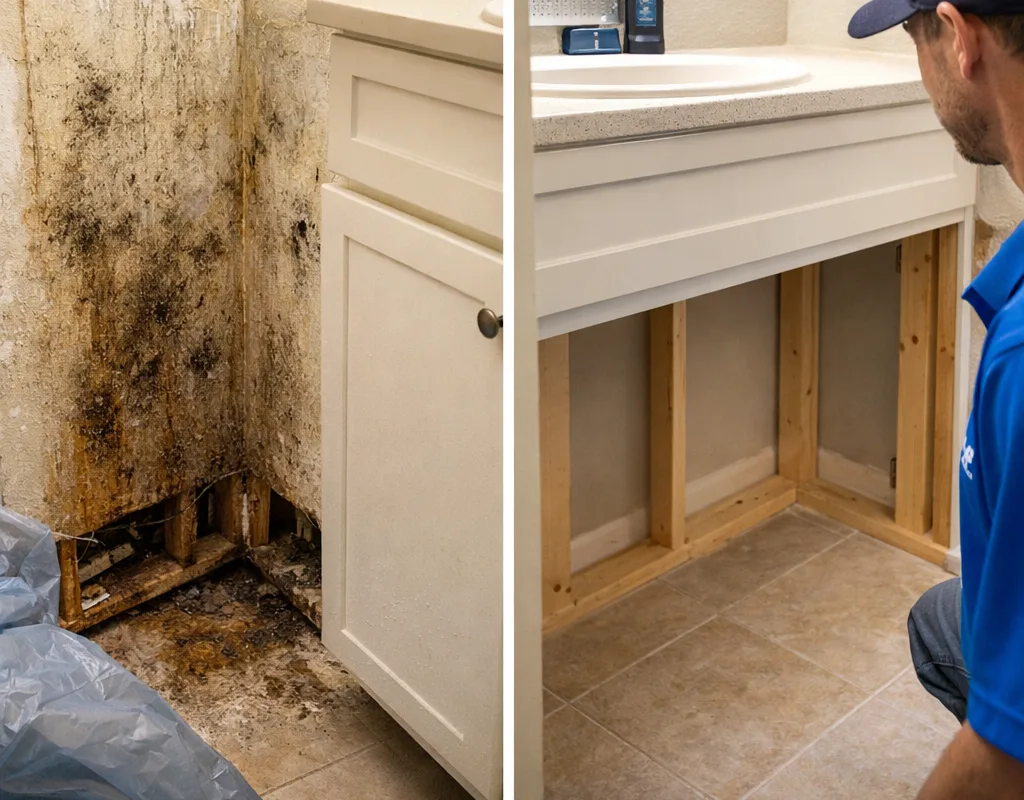
Removal of affected drywall, insulation, baseboards, or cabinets only where needed, based on moisture and visible contamination patterns.
HEPA-filtered vacuuming of surfaces inside containment, followed by damp wiping of framing and structural surfaces as appropriate.
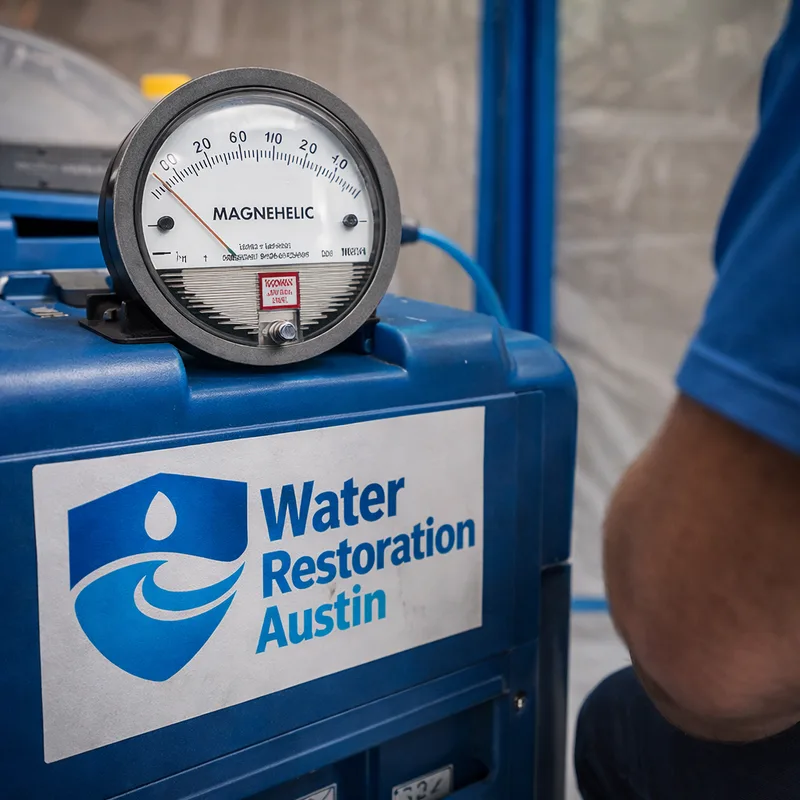
Air movers and dehumidifiers sized to the space and moisture load, with monitoring until materials reach an acceptable dry standard.
When musty odor is part of the complaint, we focus on removing wet or contaminated porous materials first, then address remaining odor sources after drying.
We document what was removed and cleaned, and we can coordinate third-party clearance testing if you want independent confirmation.
Local building conditions
Mold problems cluster around moisture, not around a specific zip code. Still, certain building patterns around Austin tend to create repeat scenarios:
If you suspect an issue, avoid running bathroom fans into an already wet cavity, avoid pulling off large areas of drywall without containment, and keep the area as dry as possible until you get an on-site assessment.
Request Emergency ServiceFrom concern to documented cleanup
You tell us what you noticed—odor, visible growth, a recent leak, or a humidity issue. We outline what to check first so the visit is efficient.
We measure, trace likely sources, and determine which materials are impacted. If opening is needed, we explain what we plan to open and why.
You get a written plan that separates necessary work from optional steps, including containment needs and what areas will be disturbed.
We set containment when warranted, remove affected porous materials, HEPA clean the space, and keep cross-contamination risk low.
We dry to an appropriate standard for the materials involved, document readings and progress, and review next steps for repairs if needed.
Containment, filtration and drying
Customer experiences
“We had a musty smell that wouldn't go away after a small leak. The inspection was thorough and the scope spelled out exactly what needed to come out and what could stay. The containment kept the rest of the house clean, and the odor was gone once the wet materials were removed.”
“They showed us moisture readings in the wall and explained why drying alone wasn't enough in one section. The documentation made it easy to coordinate with our property manager.”
Answers before assessment
Mold remediation cost depends mostly on the size of the affected area, what materials are involved, and whether containment with negative air is needed. Small, contained jobs may be a few hundred to a couple thousand dollars, while larger multi-room or HVAC-adjacent projects can run higher; the most accurate number comes from a moisture-mapped scope that lists exactly what gets removed and dried.
You do not always need air testing to start remediation, but independent testing can be useful when you need documented clearance for a landlord, buyer, or building management. Many clients choose to begin with a thorough inspection and written scope, then add third-party clearance testing after the work if documentation is the priority.
Bleach is not a reliable fix for porous building materials because the moisture can soak in while the chlorine dissipates, and it does not address the source of dampness. A mold specialist typically focuses on removing contaminated porous materials, HEPA cleaning remaining surfaces, and drying the structure so conditions no longer support regrowth.
Many single-room projects can be completed in 1 to 3 days, plus drying time if materials are still wet. Larger jobs take longer because containment, selective demolition, drying cycles, and verification steps add time; your schedule is driven by measured moisture levels, not by a fixed calendar.
Keep the area as dry as possible, avoid disturbing stained drywall or insulation, and note when and where the odor is strongest—for example, after the AC runs or after a shower. An on-site assessment with moisture mapping is usually the fastest way to narrow down the source and avoid unnecessary tear-out.
Yes, and the first priority is controlling moisture so the situation stops getting worse. When there is an active or recent water event, we often stabilize the environment with drying and dehumidification, then move into remediation steps based on what materials stayed wet long enough to become contaminated.
If you smell mildew, see spotting, or had a leak that may have soaked behind finishes, getting a measured inspection and a written scope is the safest place to start.
Call for Emergency HelpShare what you are seeing and where it is happening. We will walk the property, map moisture, and lay out a clear plan to remove contaminated materials and dry the structure safely.