
Carpet and pad
Even when carpet looks only damp, the pad can hold a lot of water. Weighted extraction and multiple passes reduce wicking up the walls and help drying equipment work faster.
Serving Austin, Texas & surrounding areas
Water extraction • Austin, Texas
When water is spreading through flooring, baseboards, or drywall, fast removal matters. Get a local team on site to extract water, set professional drying equipment, and document what was affected so you can make clear next-step decisions.
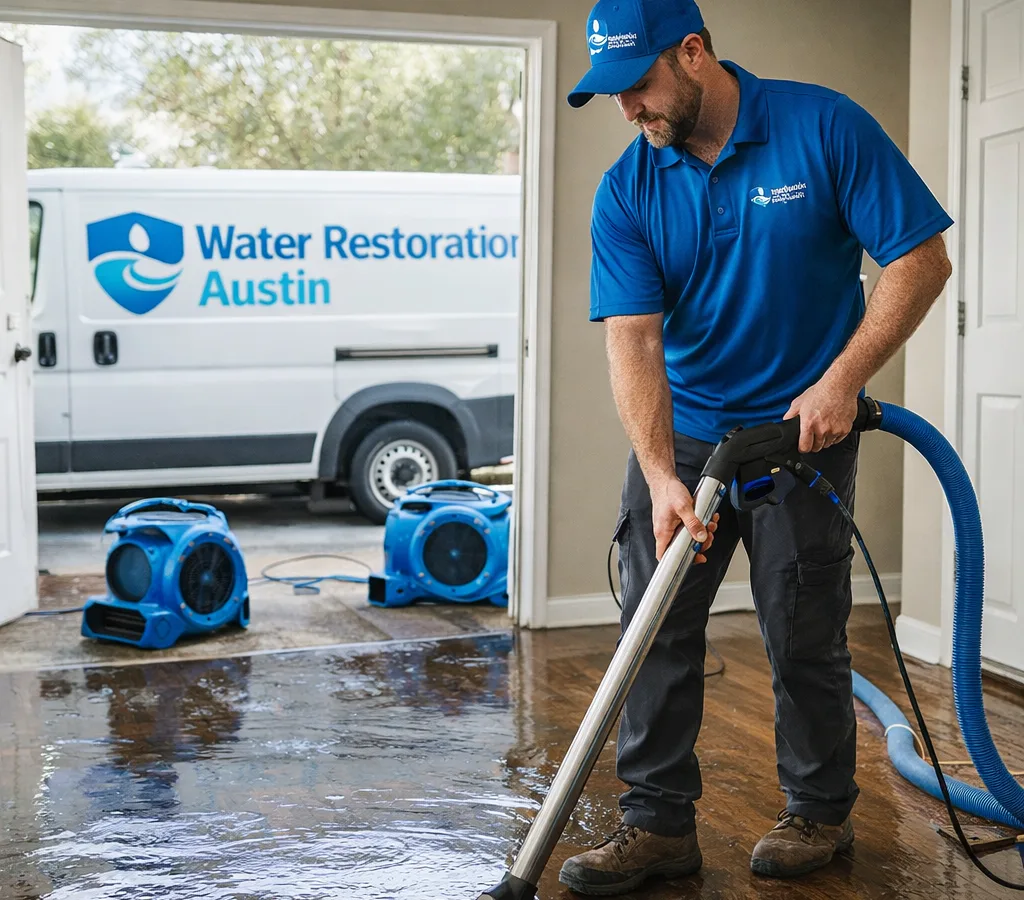
Immediate removal and measured drying
If you are searching for Austin TX water extraction, you likely have an active leak, a flooded room, or wet building materials that need attention now. Water moves quickly through seams, under flooring, and into wall cavities. Extraction stops the spread, shortens the drying cycle, and reduces the odds that wet materials turn into a bigger rebuild.
Water Restoration Austin focuses on the immediate, hands-on work that gets a wet property under control:
Austin properties can vary a lot: slab-on-grade homes, pier-and-beam crawlspaces, older bungalows with multiple flooring layers, and newer builds with tighter building envelopes. The extraction plan changes with the structure and material stack-up, not with a one-size checklist.
From bulk removal to dry-standard readings
A good Austin water extraction response is organized and measurable. The goal is to remove bulk water first, then dry what remains in the structure.
We start by identifying the water source, checking for obvious electrical hazards around wet outlets or appliances, and deciding what areas must be accessed right away.
Standing water is removed first, typically with high-capacity portable extraction. On carpet, weighted extraction and multiple passes pull water from the pad and reduce wicking.
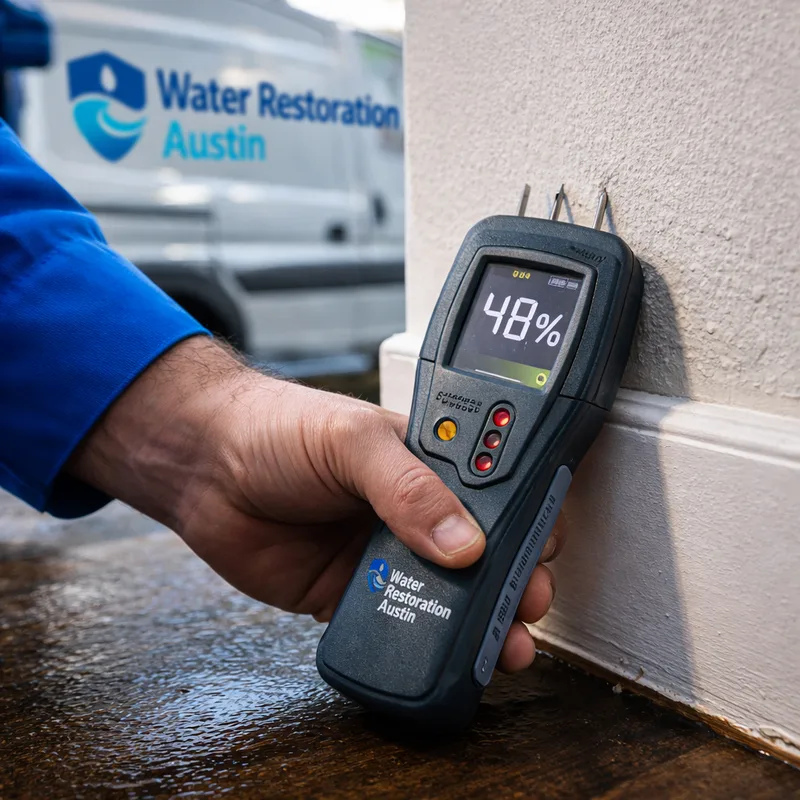
We take readings in walls, floors, and trim. This defines the drying boundary so equipment is sized to the actual affected area.
Air movers drive evaporation, while dehumidifiers capture moisture from the air. Where water has traveled, limited access openings may be recommended behind baseboards or lower drywall so trapped moisture can dry.
Drying is a process, not a single visit. Readings tell us when to reposition equipment, add capacity, or confirm that materials have reached a stable dry standard for that assembly.
If you are also trying to understand the bigger restoration sequence beyond extraction and drying, water restoration in Austin typically includes documentation and coordination steps that keep the project moving after the initial emergency work.
Hidden moisture pathways
Even when carpet looks only damp, the pad can hold a lot of water. Weighted extraction and multiple passes reduce wicking up the walls and help drying equipment work faster.
LVP, laminate, and some engineered wood can trap water at seams and underlayment layers. We evaluate whether surface drying is enough or if sections need to be released for proper airflow.
Drywall and trim can absorb water from the floor line. Moisture mapping determines whether targeted access is needed to dry the wall cavity and prevent ongoing swelling or delamination.
These areas often involve multiple penetrations and transitions, including toe-kicks, vanity bases, and supply lines. Extraction includes checking adjacent rooms because water often travels under thresholds.
On slab foundations, water can migrate along low points and grout lines. Extraction focuses on bulk removal and controlling humidity so moisture is pulled up and captured by dehumidification.
For pier-and-beam areas, water can collect below the floor system. Extraction and drying may require focused airflow and dehumidification to prevent lingering moisture in framing members.
Local structures and drying conditions
Water extraction Austin projects are not all the same. A few local realities can change what a professional response looks like:
Effective drying starts with accurate boundaries and equipment sizing, not just placing a few fans in the wet room.
Request Emergency ServiceA clear, measurable response
We inspect the affected areas, identify likely pathways for water migration, and outline what extraction and drying will involve. You get a clear scope before work expands.
We remove standing water and extract water held in carpet and pad, focusing first on the areas that drive most of the moisture load and spread.
We take moisture readings and determine equipment placement and capacity. If building materials are trapping moisture, we explain access options and why they are recommended.
Air movers and dehumidifiers are placed to create effective airflow and humidity control. We also consider protecting unaffected rooms and minimizing disruption.
We monitor drying progress with moisture readings until materials reach an appropriate dry standard for that assembly, then document completion and next steps.
Customer experiences
“A supply line leaked overnight and the carpet felt dry on top but the pad was soaked. They extracted a surprising amount of water, set dehumidifiers, and checked moisture in the walls for a few days. The plan was clear and the updates were easy to follow.”
“We had water spread from the laundry into the hallway. They mapped the moisture and found it had traveled under the flooring farther than we thought. Extraction and drying were handled fast, and the documentation made the next steps straightforward.”
Answers before work begins
You should schedule extraction as soon as you can because standing water and saturated materials keep spreading moisture into adjacent rooms and wall edges. The sooner bulk water is removed, the shorter and more controlled the drying phase usually is, especially in Austin's humid conditions.
Water extraction typically includes removing standing water, extracting water from carpet and pad, initial moisture readings, and setting drying equipment like air movers and dehumidifiers. A thorough job also includes moisture mapping and follow-up monitoring so the team can confirm materials are drying, not just feeling dry on the surface.
Drying often takes several days, but the timeline depends on how much water entered, the materials involved, and whether water is trapped under flooring or inside cavities. The most reliable way to estimate duration is through moisture readings over time, with equipment adjusted based on those measurements.
Sometimes, yes, because water can be trapped under rugs, underlayment, or along baseboard lines where airflow cannot reach. We usually start with non-destructive extraction and moisture mapping, then recommend limited removal only when readings show that drying cannot be achieved without access.
Often you can, as long as the carpet and pad can be thoroughly extracted and dried and the condition of the materials supports salvage. The deciding factors are how long the carpet stayed wet, what materials were affected underneath, and whether moisture has migrated into walls or cabinetry.
Cost is mainly driven by the size of the affected area, the amount of water to remove, how many rooms and material types are involved, and how much equipment and monitoring time are required. Homes with water trapped under hard flooring or inside wall cavities often require more labor and longer drying than a simple, contained spill.
If wet floors, soaked carpet, baseboards, or drywall are involved, fast extraction can keep the affected area from growing and simplify the drying plan.
Call for Emergency HelpTell us what happened, what rooms are affected, and whether the water is still active. We will outline the extraction steps, the equipment plan, and what documentation you can expect before work begins.