
Clear scope before major demolition
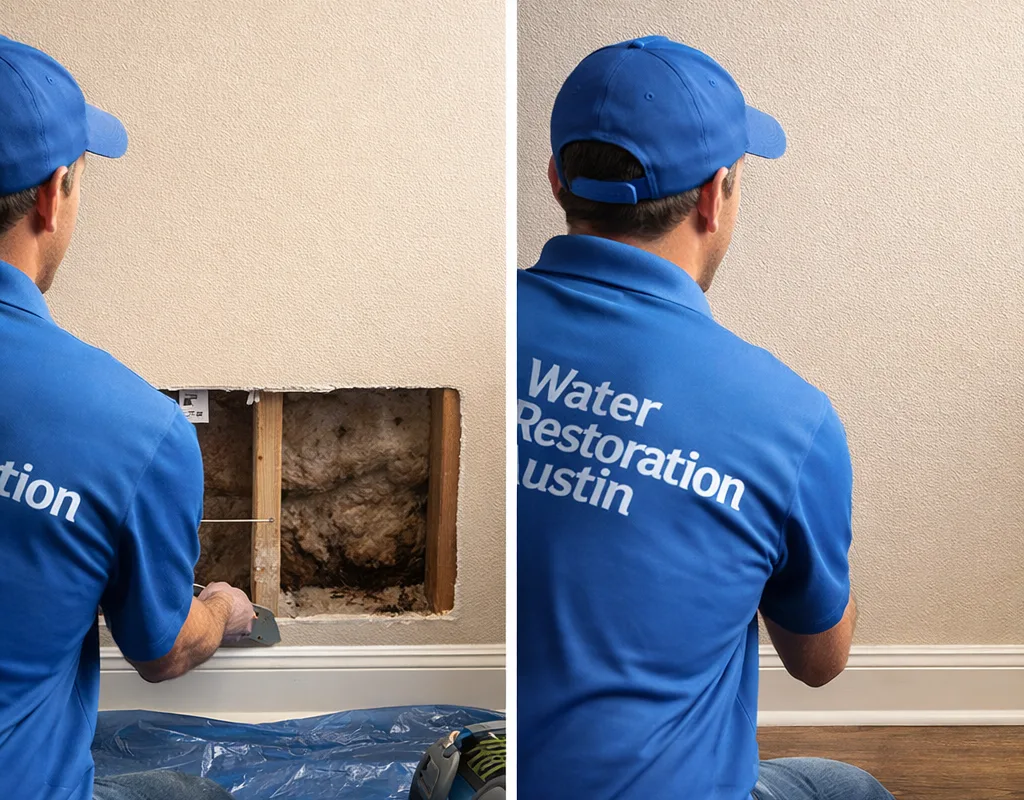
We explain what is wet, what needs to come out, and what can realistically be dried in place. That keeps the project focused and reduces unnecessary disruption.
Serving Austin, Texas & surrounding areas
Water damage restoration • Austin, Texas
Fast water removal, careful drying, and full rebuild coordination so your home or business can get back to normal with less disruption.
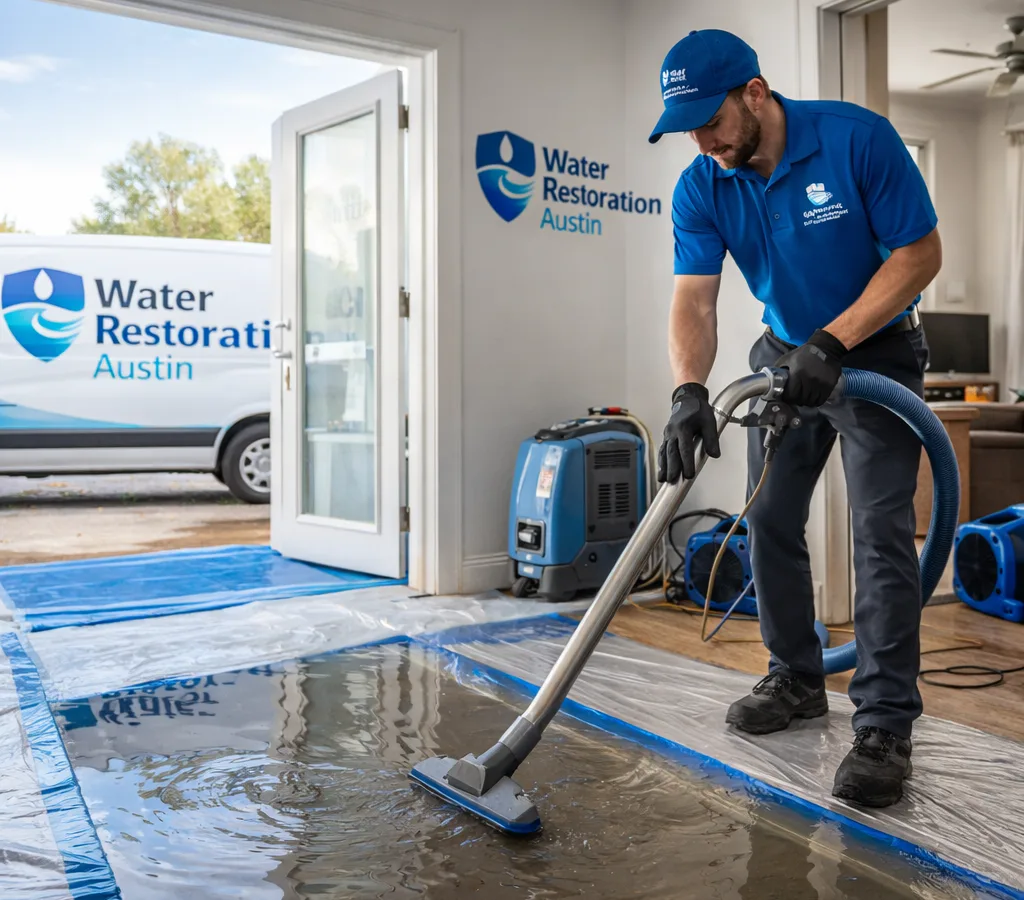
Measured drying and clear next steps
If you're searching for water damage restoration Austin homeowners and property managers rely on, you're usually dealing with a time-sensitive problem: wet building materials, rising humidity, and the risk of hidden moisture behind walls or under flooring.
Water Restoration Austin provides water damage restoration in Austin for residential and commercial properties. We focus on the work that protects the structure: controlled water extraction, professional drying and dehumidification, careful monitoring, and a documented plan you can share with your insurance adjuster.
Austin storms and sudden downpours can overwhelm roof drainage, window seals, and older exterior details. Inside, a supply line, water heater, or upstairs overflow can soak drywall and insulation quickly. The goal is the same in every case: stop the spread, dry the structure the right way, and repair what water compromised.
A quality water damage restoration company in Austin should be able to explain where moisture likely traveled, how it will be measured—not guessed—and what conditions must be met before rebuilding starts. Our team keeps the scope clear, the work area protected, and the next steps easy to follow.
From extraction through verification
Water damage restoration is more than removing visible water. In Central Texas, heat and humidity can hold moisture in framing cavities and under hard surfaces longer than people expect. We treat every job like a building science problem: locate moisture, remove it, and verify it is dry before repairs.
We work on common Austin property types, from slab-on-grade homes to multi-story condos where leaks can affect multiple units. When shared walls or units are involved, we can coordinate documentation that helps everyone stay aligned.
For a broader overview, review our approach to water restoration in Austin.
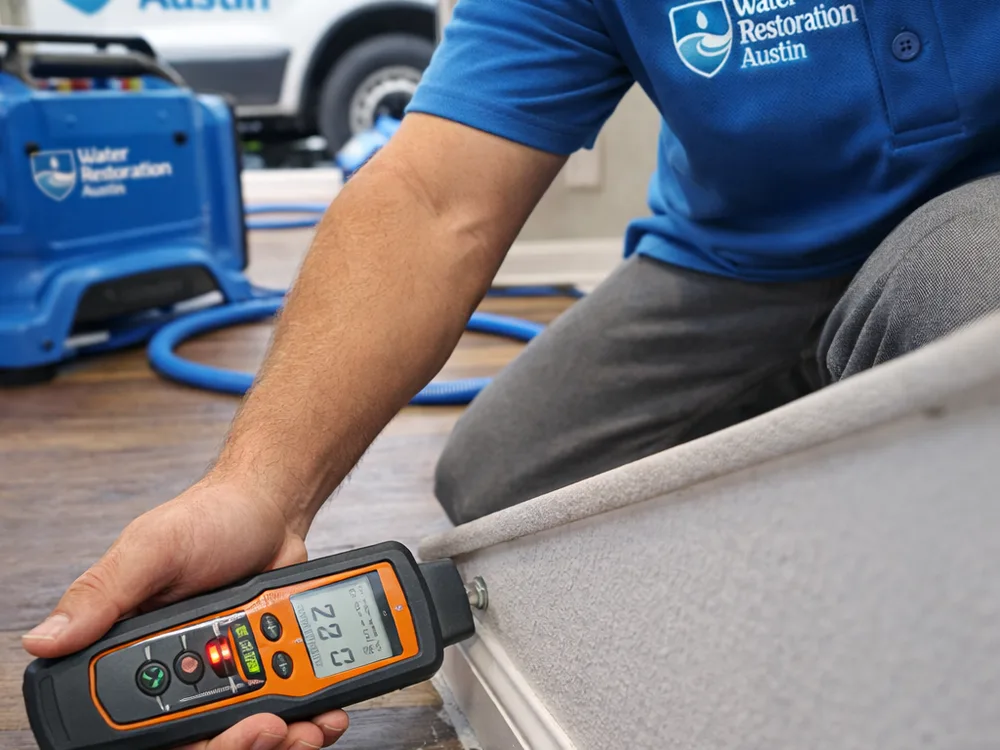
A controlled restoration plan
We explain what is wet, what needs to come out, and what can realistically be dried in place. That keeps the project focused and reduces unnecessary disruption.
We base decisions on moisture readings and drying targets, then document progress so you know when it is safe to move into repairs.
We protect floors and contents, manage dust when selective demolition is needed, and keep walk paths safe for occupants and tenants.
We provide a written scope and photos where appropriate. If you involve insurance, that paper trail helps the claim move with fewer back-and-forth questions.
For offices, retail, and multi-unit properties, we plan drying equipment placement and access so daily operations can continue when possible.
We see recurring issues in older plumbing and remodel layers, as well as newer builds where supply line failures can spread quickly across multiple rooms.
From the first assessment to repair
We identify the source category—clean supply, gray, or contaminated—check for electrical hazards, and recommend immediate steps to prevent further damage.
We locate affected materials and likely migration routes, then outline what will be extracted, dried in place, or selectively removed.
We remove standing water, then place air movers and dehumidification to match the space while protecting finishes and maintaining safe access.
Drying is not set-and-forget. We monitor moisture and humidity, adjust equipment and containment as needed, and document progress.
Once materials reach acceptable dryness, we confirm conditions are ready for repair. This prevents rebuilding over wet materials that can cause swelling, odor, or microbial growth.
We coordinate the repair scope so the space is put back together properly. You receive a clean finish and a clear closeout of the completed work.
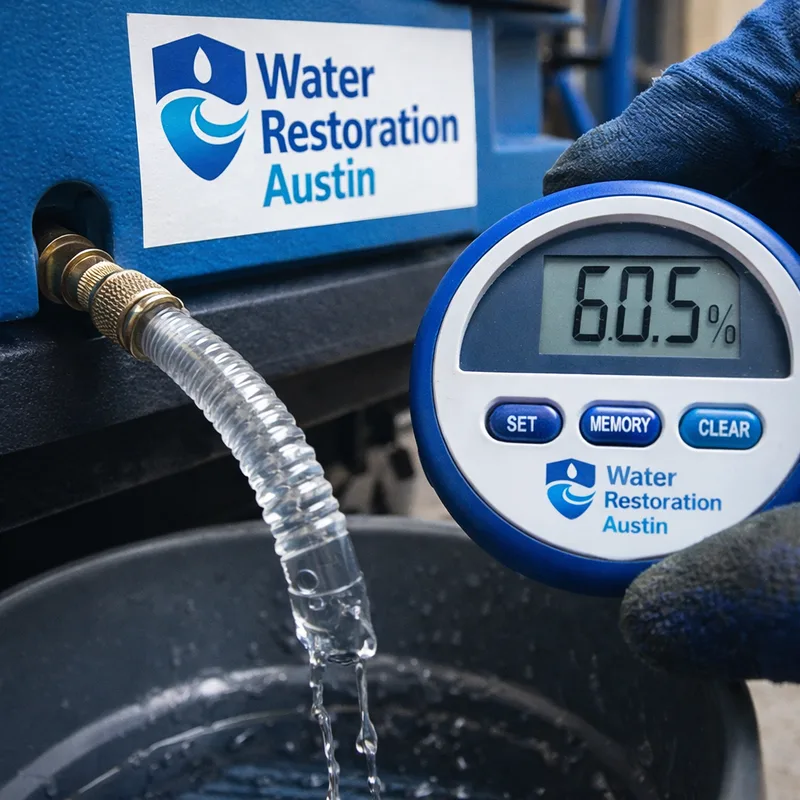
Protected work areas and documented drying
Customer proof
“We had water come through the ceiling from an upstairs leak. They explained what needed to be opened up, kept the mess contained, and checked moisture readings every day until it was actually dry. The documentation also helped when the adjuster asked questions.”
“They treated our office like a working space, not a construction zone. Equipment placement was thoughtful, and the plan was clear about what could be saved versus what had to be removed.”
Answers before work begins
You should start as soon as it's safe because water can migrate into drywall, insulation, and flooring within hours, increasing drying time and the amount of material affected. Austin's warm conditions can also increase odor and microbial risk when drying is delayed. If you can safely stop the source and move valuables, that helps, but professional extraction and structural drying should follow quickly.
Cost depends on the category of water, how far it spread, the materials affected, and how much selective demolition is needed to reach trapped moisture. A contained clean-water incident may primarily require extraction and drying, while a multi-room loss can include removal and repairs. An on-site inspection with moisture mapping and a written scope provides the most accurate next step.
Sometimes, depending on how wet the material is, how long it stayed wet, and the type of water involved. Drywall and insulation may require selective removal if water wicked upward or saturated the cavity. Hardwood and engineered flooring can sometimes be saved with controlled drying, though swelling or finish damage may still require replacement. Decisions should be based on readings and material condition, not appearance alone.
Drying commonly takes several days, but timing depends on the amount of water, airflow access, and whether moisture is trapped behind finishes. An open area can dry faster than a wall cavity or water beneath flooring. We monitor moisture and humidity and adjust equipment until the structure reaches an appropriate dry standard for repairs.
Yes. If you choose to file a claim, we provide a written scope and job documentation explaining affected areas, equipment used, and the work required to dry the structure. Coverage decisions are determined by your policy and carrier, but clear documentation can reduce confusion and delays.
Look for a company that explains the drying plan in plain language, uses moisture measurements to guide decisions, and provides a written scope before major work begins. Expect straightforward communication about what can be dried versus removed, protection of the work area, and documentation throughout the drying phase.
If you have water in walls, ceilings, or flooring, the safest next step is an on-site assessment with moisture mapping and a clear plan for drying and repairs.
Call for Emergency HelpTell us what happened and what areas are affected. We'll confirm next steps, outline a practical scope, and help you move from emergency cleanup to a finished restoration.