
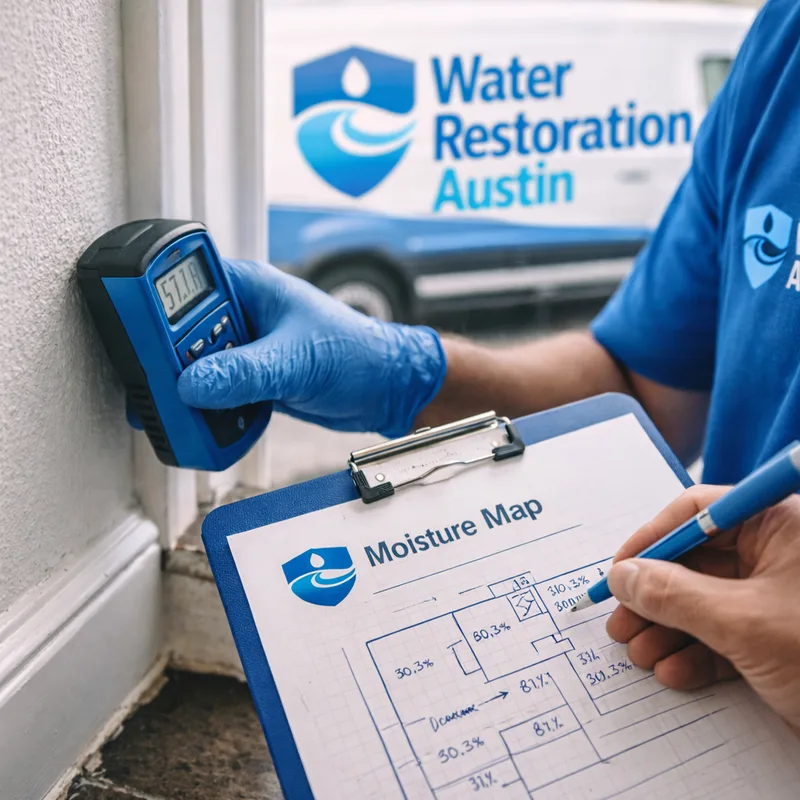
Moisture mapping and meter readings
We take systematic readings across affected and unaffected areas to outline the wet boundary. This helps confirm where water is traveling, not just where it appears.
Serving Austin, Texas & surrounding areas
Leak detection • Austin, Texas
Find the leak fast, pinpoint it precisely, and protect your property from avoidable water damage. Our techs locate hidden leaks in walls, slabs, ceilings, and supply lines so the right repair can start with a clear plan.
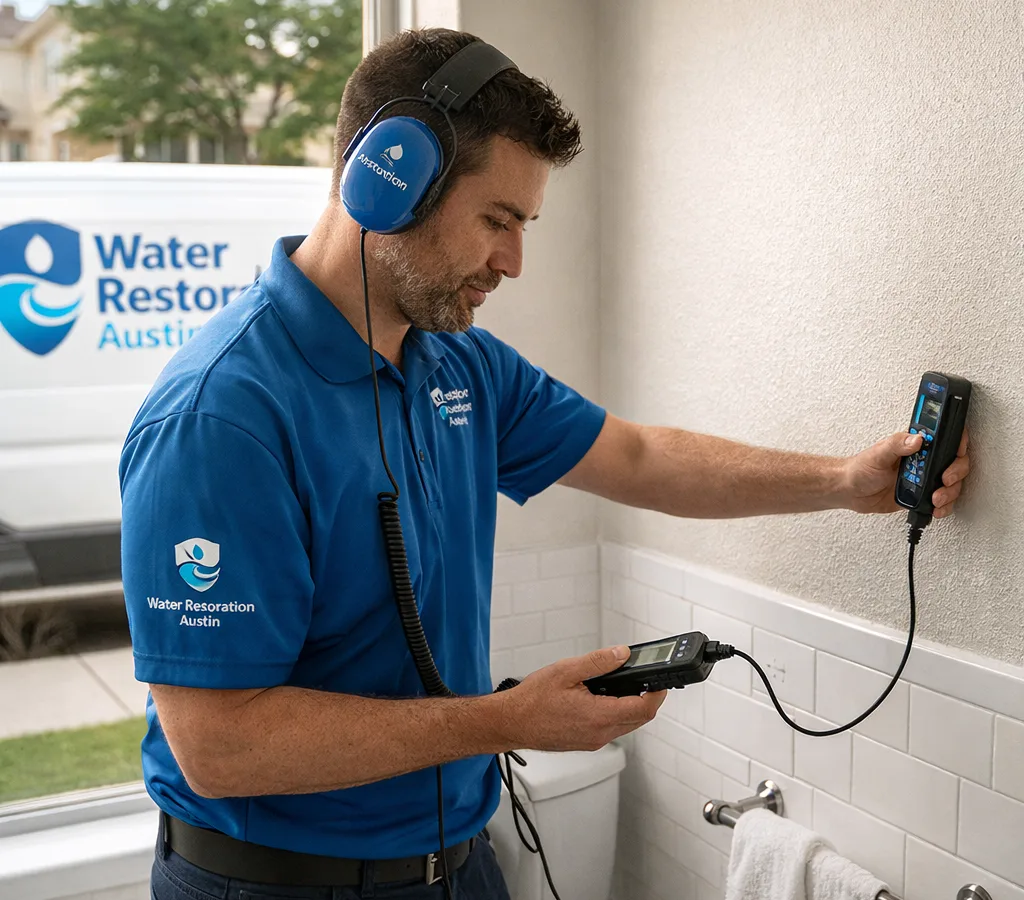
Pinpoint the source before repair
When you suspect a leak, the biggest cost driver is often time: water keeps moving until the source is found and stopped. Water leak detection Austin Texas work is about pinpointing the exact location of the failure—and the type of failure—so your plumber or repair team can open up the smallest area possible.
At Water Restoration Austin, we handle Austin leak detection for homes and commercial spaces across the Austin area. We look for the source behind symptoms like rising water bills, damp drywall, warm spots on floors, musty odors, bubbling paint, recurring mold growth, or water that shows up with no obvious cause.
If you are dealing with active water damage as well, our team also coordinates next steps for water restoration in Austin once the leak is confirmed and contained.
Symptoms, systems and access
Most hidden leaks fall into a few common categories, and the best detection method depends on which one you are dealing with.
We keep the focus on non-invasive locating first. Once the likely source is pinpointed, you can make a confident decision about the smallest, cleanest path to repair.
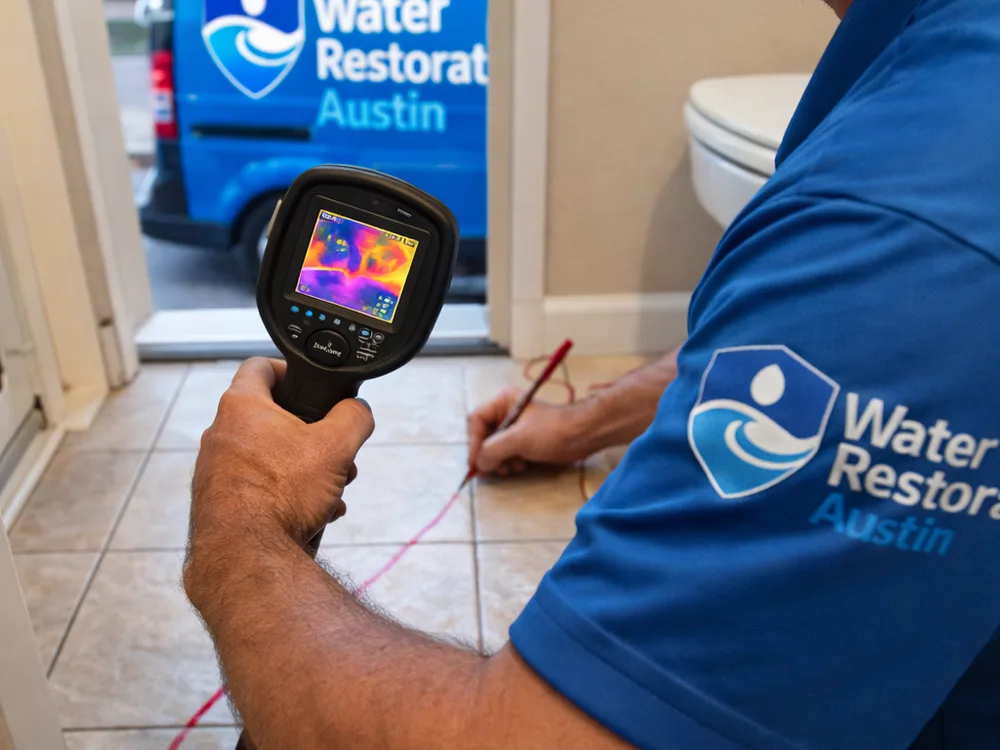
Non-invasive locating first
We take systematic readings across affected and unaffected areas to outline the wet boundary. This helps confirm where water is traveling, not just where it appears.
Infrared imaging can reveal temperature differences that match a hot water line leak or water spread patterns behind surfaces. It is a locating tool, not a standalone diagnosis.
Pressurized leaks can create a distinct sound signature. Acoustic sensors help narrow down the loudest point along a line so access can be targeted.
When appropriate, we use fixture-by-fixture and zone-by-zone checks to separate supply, drain, and intrusion causes. The goal is to avoid opening multiple areas.
You get a straightforward summary of findings, suspected source location, and what to open—if anything—so the repair can start with fewer unknowns.
For offices, retail, and multi-unit buildings, we plan around access, tenant impact, and after-hours options when needed while still prioritizing fast locating.
Local building conditions
Austin properties range from older central neighborhoods to newer construction in expanding corridors, and that mix matters for leak detection Austin TX.
We work throughout Austin, including areas like Hyde Park, where prior remodel plumbing can complicate tracing; South Congress, where mixed-use access planning matters; Mueller, where early detection helps prevent finish damage; East Austin, with its mix of remodels and new builds; and Circle C, where isolating zones in larger homes can speed up locating.
Request Emergency ServiceFrom symptoms to a repair target
We start with what you are seeing—active dripping, staining, wet flooring, odors, or bill spikes—and whether water should be shut off immediately to limit spread.
We check the visible area first, then map moisture outward to understand how far water has traveled and which direction it is moving.
Using the right tools for the situation—acoustic, thermal, moisture readings, and targeted isolation—we narrow down the origin point as tightly as conditions allow.
We identify the best access point for repair and document what we found so the next trade can open the correct area the first time.
If repairs or drying are needed, we explain what needs to happen next, what can wait, and what should not wait.
Targeted investigation

Clear answers before detection
Leak detection cost in Austin depends on access, building type, and how clear the symptoms are, so pricing is usually based on the time and tools required rather than a single flat number. A straightforward, accessible pressurized leak is often faster to pinpoint than an intermittent drain leak or a multi-unit situation with limited access.
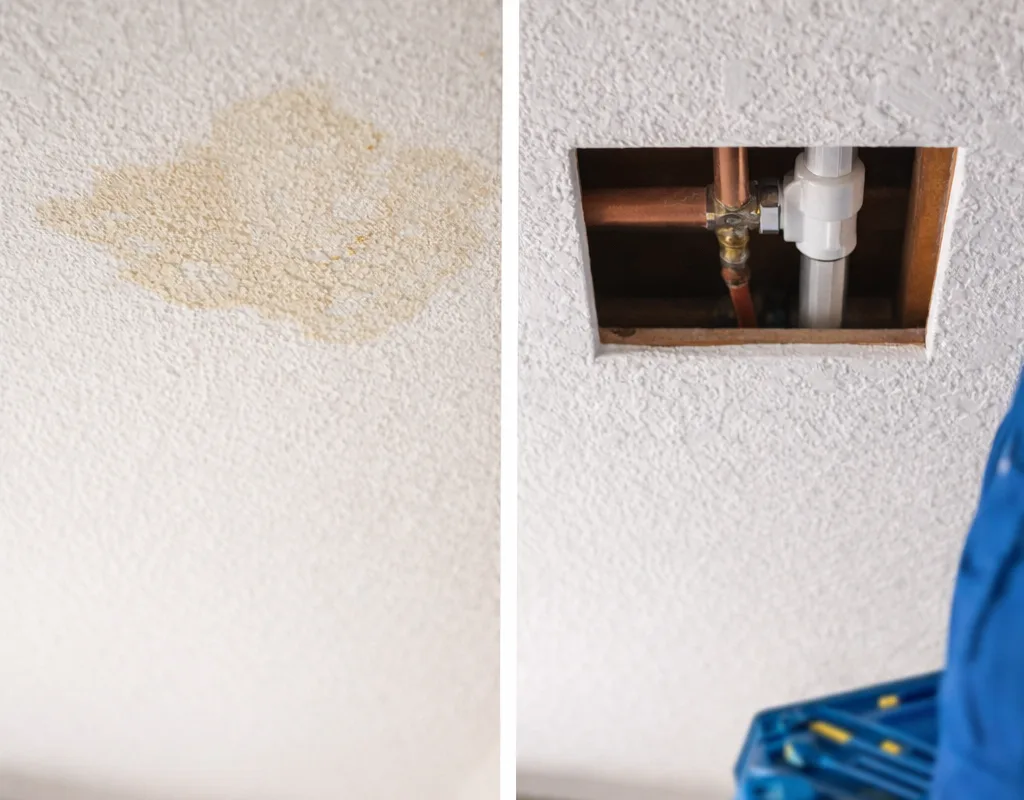
Often yes, at least to narrow the source to a small area, because tools like moisture meters, thermal imaging, and acoustic listening can locate patterns behind finishes. If the leak is inside a wall cavity or under a slab, a small, targeted access opening may still be needed for confirmation and repair, but accurate detection reduces how much has to be opened.
If you have active moisture, new staining, a musty odor, warped flooring, bubbling paint, or a water bill jump that does not match your usage, it is time to schedule detection. In Austin's heat, damp building materials can develop odor and secondary damage faster than many homeowners expect, so early locating matters.
Yes, we can help identify whether the symptoms point to a slab-related source and narrow the likely location using moisture mapping, thermal clues, and system isolation. The goal is to give your repair team a precise target so they are not chasing the leak across the floor.
Many leak detection appointments can be completed in a single visit, but the timeline depends on whether the leak is continuous or intermittent and how easy it is to access the piping or affected areas. If a leak only shows up during shower use or after irrigation runs, we may need specific timing or controlled testing to reproduce it.
Yes, we approach the problem by identifying patterns and triggers, then testing the most likely causes rather than assuming one source. In Austin, heavy rain events can lead to water showing up far from the entry point, so we focus on locating the pathway as well as the wet materials.
If you can do so safely, keep the area accessible, note when the moisture appears, and avoid running fixtures that seem to worsen the problem. If water is actively flowing or spreading, shutting off the water supply can limit damage until the source is confirmed and repaired.
Tell us what you are seeing and where it is happening. We will help you confirm whether it is a supply, drain, slab, or intrusion issue and map out the quickest path to a precise repair.